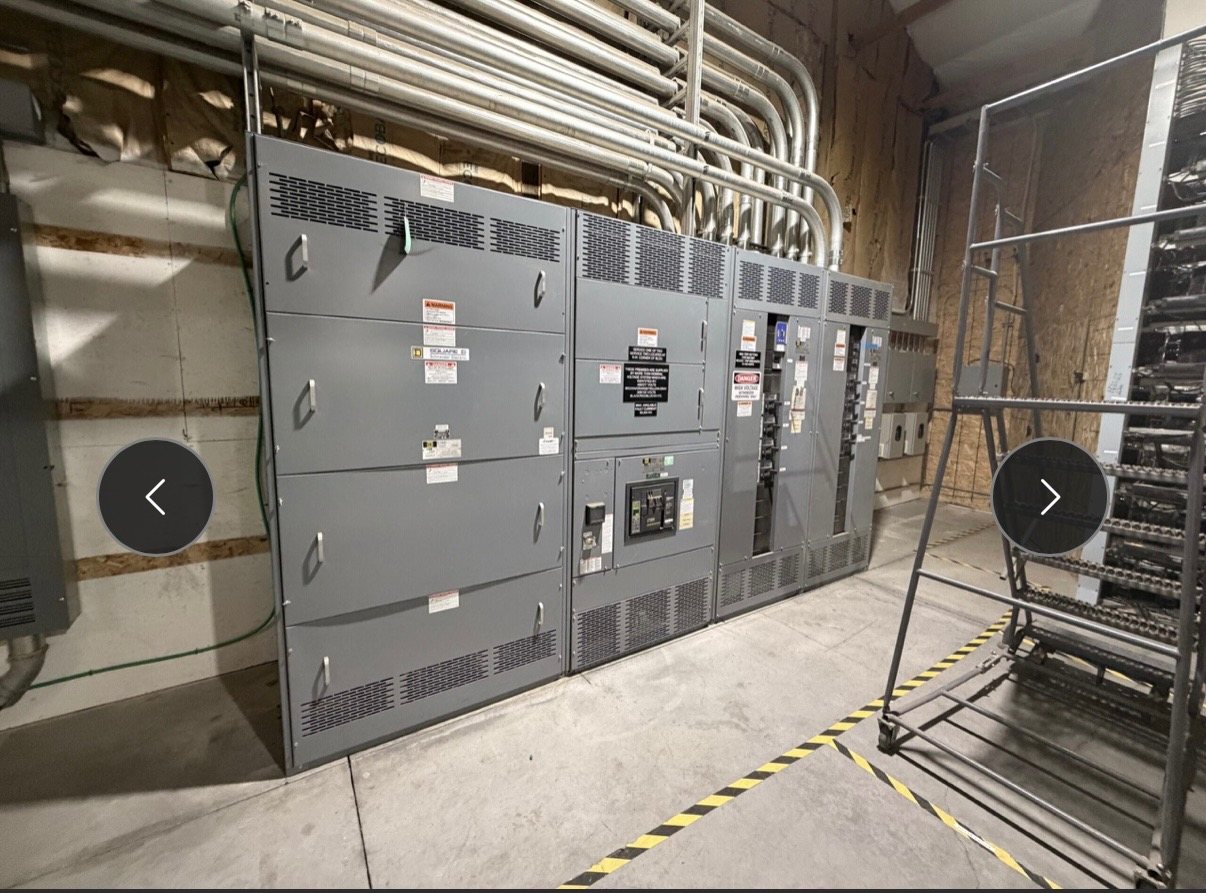
Start with the ownership boundary
Telecommunications facilities commonly contain two broad classes of equipment that should not be treated as one surplus lot. Customer-owned electrical infrastructure may include AC switchgear, distribution panels, transfer or bypass assemblies, and related power equipment serving the building or facility. Carrier-owned assets may include network, transmission, or site-specific communications equipment. Physical proximity does not prove common ownership: an electrical assembly in a telecom room may support a carrier tenant, while equipment elsewhere may belong to the facility owner.
Before offering anything, identify who owns each item and who has authority to approve its disposition. A landlord, facility operator, contractor, or carrier may possess different records or responsibilities. If ownership is unclear, pause that item rather than assuming it is available. A buyer can review equipment offered for purchase, but an inquiry or offer does not establish title, authorize removal, or mean every item will be accepted.
Separate AC infrastructure from network assets
A useful first-pass inventory describes electrical function without trying to infer more than the records support. Note whether an item is identified as an AC distribution lineup, a bypass assembly, or another facility-power component, and record visible nameplate information such as manufacturer, model, and ratings where available. A bypass assembly may be associated with a power path, but its presence alone does not explain the connected system or prove the arrangement is complete.
Keep network equipment in a separate inventory category, especially where carrier ownership or service responsibility is possible. Avoid bundling racks, communications components, or unidentified cabinets with switchgear simply because they occupy the same room. Do not open enclosures or touch equipment to gather details; use existing records and safe, authorized visual information. A rating on an assembly is not necessarily the rating of each device within it, and a label does not establish condition or suitability.
Explore related information: We Buy Used & Surplus Switchgear.
Treat records as potentially confidential
Telecom records may reveal more than equipment identity. Drawings, rack elevations, circuit references, network labels, access details, and asset spreadsheets can contain confidential or security-sensitive information. Before sending photographs or documents, confirm that the person sharing them is permitted to do so and remove or withhold material that is not needed for an equipment review. A limited inventory may be enough to begin a discussion without exposing network layouts or customer information.
Separate evidence of ownership and disposition authority from technical records that should remain restricted. If a document combines both, ask the appropriate owner or records contact what can be shared and in what form. Do not assume old paperwork is current, complete, or safe to circulate; it may describe equipment that has since changed or been reassigned. When details are unknown, say so rather than filling gaps from a label, photograph, or remembered configuration.
Use documentation to mark uncertainty
A practical equipment list can record the item’s general description, available nameplate details, approximate quantity, and where it is located within the facility, without asserting unverified specifications. Include whether ownership is confirmed, whether records are available, and which facts remain uncertain. This is especially useful where a facility-side bypass or distribution assembly is adjacent to carrier equipment or where tags do not clearly distinguish assets.
Photographs and archived documents can support identification, but they may be incomplete, outdated, or show only part of an assembly. Preserve uncertainty in the description: distinguish a visible label from a confirmed configuration, and do not infer internal components, completeness, operational status, or value from a single rating. No seller testing is required for an initial buying discussion. If an offer is made, it is based on the information available and is not a promise to accept every listed piece.
Explore related information: Nevada Distribution Equipment Buyer.
Plan removal around facility coordination
Telecom-site removal can involve more than a buyer and a seller. Facility ownership, carrier tenancy, service obligations, access permissions, and any planned shutdown or transition may affect which equipment is released and when it can be removed. Establish the authorized scope and identify who coordinates access before treating adjacent items as part of the same sale. The county reference here identifies equipment location only; it does not establish a particular project, local office, or local operating arrangement.
The seller does not need to test, rig, lift, disconnect, load, or haul equipment for the buyer. For accepted equipment, the buyer handles the removal logistics, including crane and rigging needs, disconnects, loading, freight, and hauling, with appropriate coordination at the site. The seller’s role is to provide accurate information and confirm authority and access arrangements. Do not touch or open equipment; leave any required site work to qualified personnel.
Make a clear, bounded offer request
When requesting consideration, identify the equipment as telecommunications-facility electrical surplus in Washoe County and present customer-owned AC equipment separately from carrier-owned or uncertain assets. State what is known about ownership, location, quantity, nameplates, records, and access, while flagging missing or restricted information. This lets the buyer assess the offered scope without treating every object in a room as saleable or requiring disclosure of sensitive network details.
The business buys used, surplus, and decommissioned electrical equipment and may make cash offers with payment upfront for equipment it accepts. It buys across voltage classes and does not require sellers to test equipment. The buyer covers freight and handles the removal logistics for accepted equipment, so the seller does not have to arrange the physical work. These terms do not guarantee acceptance or a particular value. Keep carrier assets and any item with unresolved ownership out of the proposed sale until authority is clear.