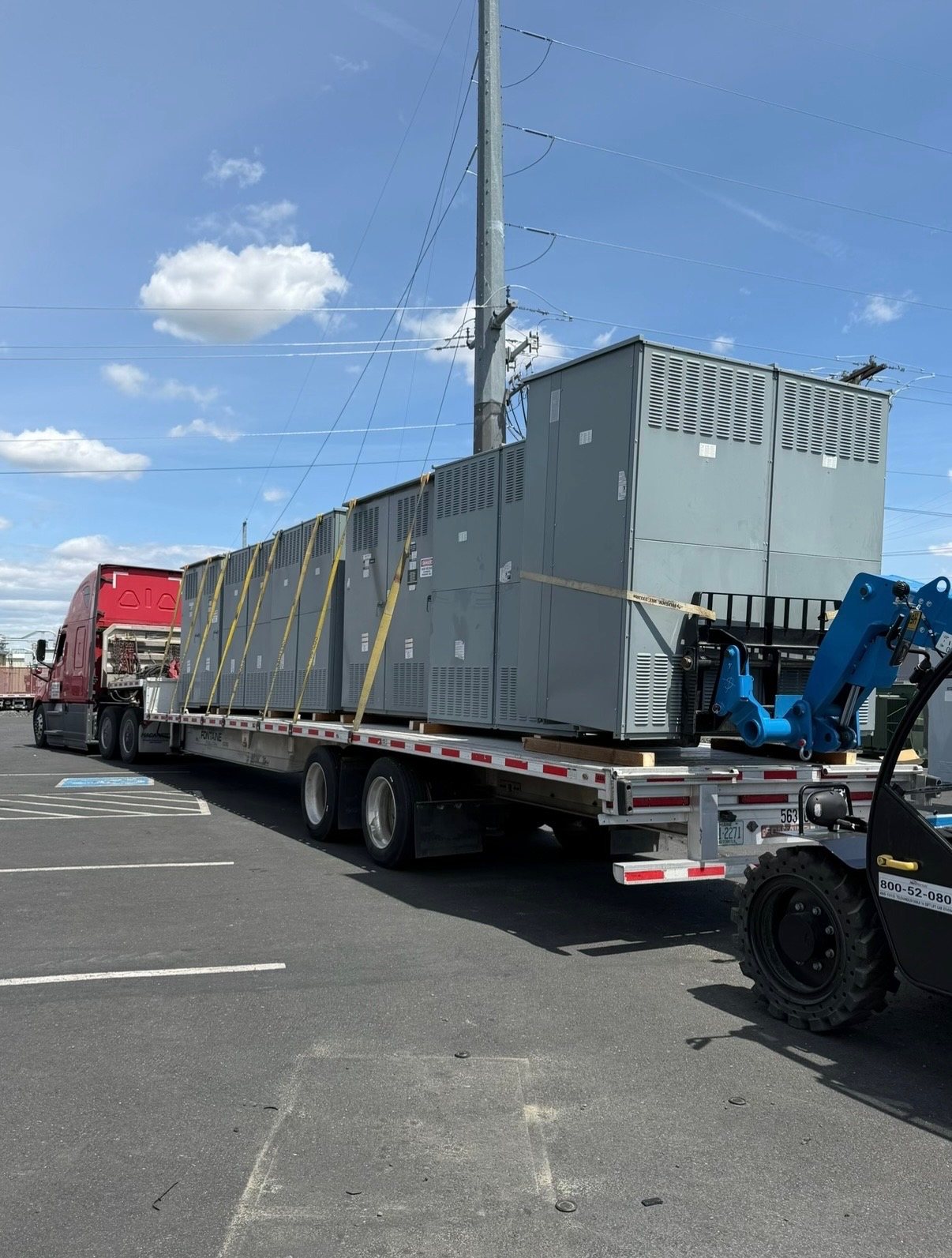
Start with the boundary, not the enclosure
A service boundary is a useful starting point for an ownership inquiry, but it does not by itself identify who owns every cabinet, conductor, transformer or switch nearby. Equipment may sit on customer property while belonging to a utility, or be customer-owned while serving equipment beyond the building. Avoid deciding ownership from proximity, fences, labels or who appears to operate a component.
Make a simple inventory of disputed items using existing site records and views already available to you. Note each item's location relative to the service entrance, meter, property line and other identifiable equipment. Keep observations separate from conclusions: “cabinet beside meter” is a recordable fact; “utility-owned cabinet” needs supporting documentation or confirmation. This distinction helps prevent an uncertain item from being represented as saleable customer property.
Gather records that establish context
Review property and project records already available to the owner, such as purchase or transfer documents, electrical drawings, equipment schedules, service agreements, invoices and prior correspondence. Older documents may describe an installation that has since changed, so record dates and note whether a drawing appears to cover the equipment currently present. A parcel record can help establish property context, but it may not resolve ownership of electrical assets within or crossing the parcel.
Look for specific identifiers rather than relying on broad descriptions. A drawing may label a point of delivery or meter location without listing who owns adjacent switchgear. A bill or work order may identify a service account, not title to every component. Preserve copies and mark uncertain references for follow-up. If records conflict, do not silently choose the version that makes equipment easier to sell; flag the discrepancy and ask the relevant record holder to explain it.
Explore related information: We Buy Used & Surplus Switchgear.
Ask the utility focused questions
Contact the utility through its established customer or service channels and describe the question as an ownership clarification, not a request for a technical ruling. Provide the service address or account reference, the equipment's location as shown in existing records, and any visible identifiers that are safe and authorized to consult. Ask which items the utility considers its property, where it understands the service boundary to be, and what documentation supports that understanding.
Keep the response with the equipment file, including the date, contact channel and any limits the utility places on its answer. A verbal explanation can help direct further research, but it may not settle a title dispute or account for later alterations. If the utility cannot identify a component from the available information, record it as unresolved. Do not treat silence, a meter reading or the fact that a utility crew has serviced an area as conclusive proof of ownership.
Describe equipment without overclaiming
For each item, record make, model, serial number, nameplate information and apparent function only when those details are available from existing documents or a safe, site-authorized view. Do not approach equipment, open an enclosure or seek a closer view; leave access or inspection to qualified personnel. A lineup's general appearance cannot establish its construction type, ownership or exact contents.
Separate the equipment itself from associated infrastructure. A customer may own switchgear while the utility owns a meter or service-side component, but that possibility is not a conclusion about any particular Boulder City installation. Conversely, a single enclosure or connected run may contain items with different ownership histories. Use an item-by-item schedule and label uncertain details explicitly. If photographs are unavailable or incomplete, say so rather than filling gaps with assumptions about what a cabinet contains or how the service is arranged.
Explore related information: Nevada Distribution Equipment Buyer.
Resolve uncertainty before listing surplus
Before presenting equipment for purchase, compare the inventory against the property records and utility response. Mark each line as documented customer-owned, identified by the utility as utility-owned, or unresolved; use the terms as a tracking aid, not as a legal determination. Set aside disputed items until the owner has enough information to represent them truthfully. If records point to a former owner, contractor or property transaction, seek clarification through appropriate channels rather than assuming the current site occupant can transfer the equipment.
This is especially important where a service entrance, meter area or shared boundary creates a mixed inventory. A utility-owned item should not be included in a customer sale simply because it is physically attached to customer gear. Likewise, an owner should not promise that a whole lineup is available when only some components are documented as theirs. A buyer can assess information supplied about equipment, but cannot establish the seller's title from an image or nameplate alone.
Coordinate the transaction around confirmed scope
Once ownership is sufficiently documented for the items being offered, provide an inventory that distinguishes confirmed equipment from exclusions and unresolved components. Include the available records, identifiers, known changes and any limits on access. If equipment is part of a larger service installation or a closure involving a data center or power plant, make clear which assets are included and which remain connected to utility or customer operations. Site access and any required utility coordination remain matters for the responsible parties and qualified personnel.
For equipment a buyer agrees to purchase, the buyer may make a cash offer, pay upfront, require no seller testing, and cover freight. The buyer handles crane, rigging, disconnects, loading, freight and hauling; the seller's role is to provide accurate information and get paid. These terms do not guarantee acceptance or a particular value for every item. Do not touch or open equipment to settle a question; leave any needed work to qualified personnel and keep ownership questions separate from removal planning.