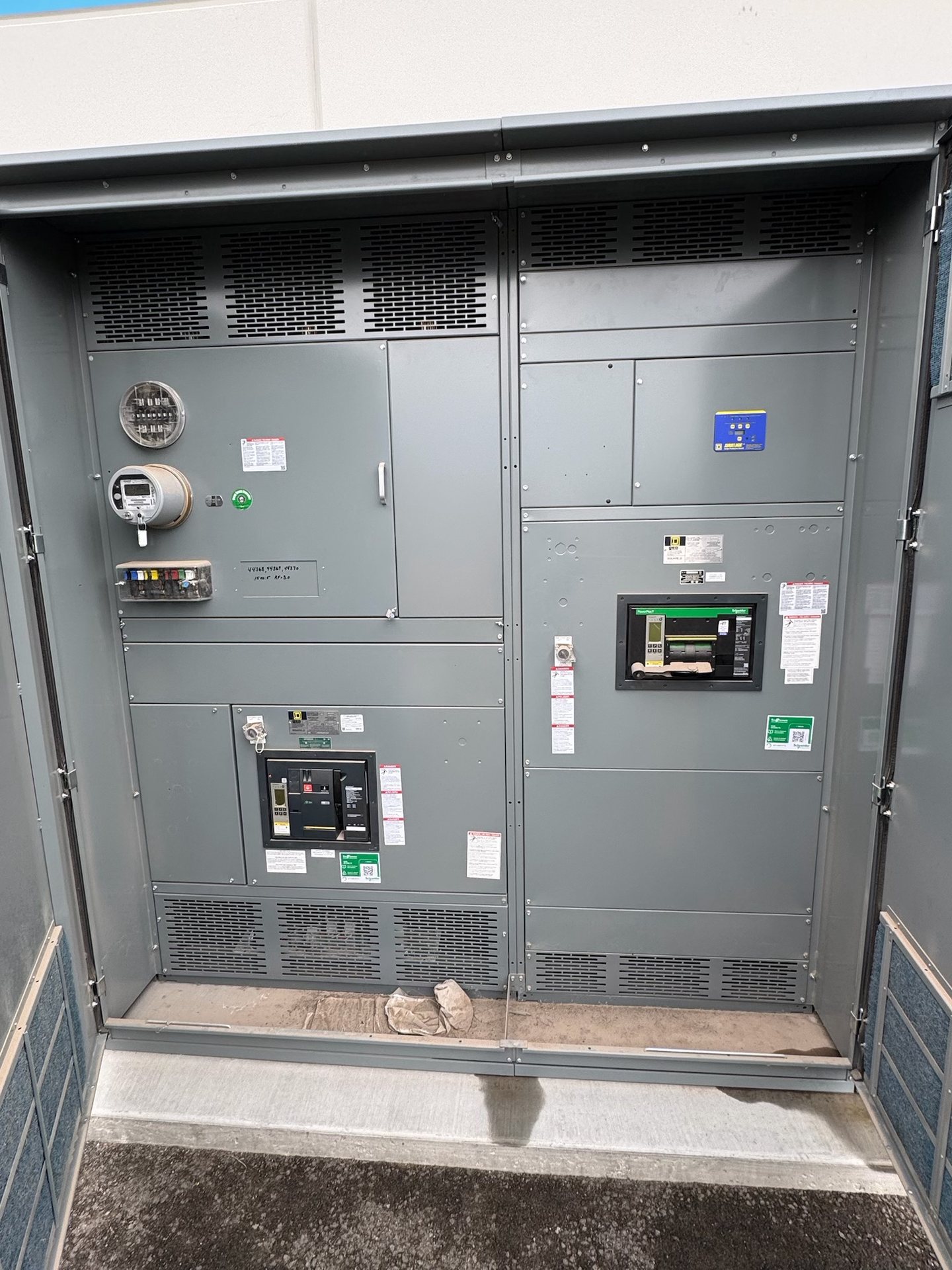
Start with a building-and-room index
Give every inventory entry a location path: site identifier, building name or number, room, and a distinct item label. Keep the building label as a location reference only; it does not establish the equipment’s rating, design, function, manufacturer, or condition. When rooms have informal names, retain those as alternate labels alongside the site’s official designation so records can be reconciled without guessing.
Separate equipment fixed in place from stored or already removed items, and note when location information is approximate. A lineup described only as “north building switchgear” is harder to assess than one assigned to a particular room and lineup position. Do not approach equipment to improve a record. Use existing photographs and documents, or images taken only from a safe, site-authorized position; leave any closer inspection to qualified personnel.
Link feeder records without assuming connections
When available, connect feeder schedules, one-line drawings, panel directories, and equipment lists to the relevant building, room, and item labels. Record document titles, dates, and revision identifiers so a reviewer can see which records belong together. A feeder name that appears in two documents may indicate a relationship, but it does not by itself prove that the records describe the same physical equipment or a current connection.
Distinguish documented facts from unresolved questions. For example, note that a schedule assigns a feeder to a named load, while marking the physical destination as unconfirmed if no reliable record establishes it. Drawings may be outdated, partial, or inconsistent with current site conditions. Do not infer a circuit’s route, equipment ownership, or suitability for removal from a matching label alone; qualified site personnel should resolve operational questions.
Explore related information: We Buy Used & Surplus Switchgear.
Identify equipment as recorded
For each item, transcribe visible information from existing records where possible: manufacturer, catalog or type designation, serial number, voltage, current, interrupting or withstand information, and any stated bus or breaker ratings. Keep the source beside each detail, such as a schedule, archived submittal, or authorized photograph. If a value is absent, illegible, or uncertain, mark it unknown rather than filling the gap from a similar-looking unit or another building’s inventory.
Preserve how a nameplate qualifies each rating. An assembly amp marking does not, by itself, establish a main-bus rating; individual breaker ratings and assembly ratings are separate details. Likewise, do not call a lineup metal-clad based on appearance alone: metal-clad is a specific type of metal-enclosed construction. A building name, equipment label, or single rating cannot establish the complete design or condition. Do not touch or open equipment to verify information.
Flag shared equipment and exclusions
A sitewide list should show not only what may be surplus, but also what must remain. Mark shared switchgear, common distribution equipment, or other assets as excluded when they serve active areas, multiple buildings, or essential site functions. Where the boundary is unclear, identify the item as pending ownership or operational review rather than presenting it as available. This distinction can prevent an inventory handoff from being mistaken for authority to remove equipment.
Record ownership and disposition status separately from physical location. A switchboard in one building may support loads elsewhere, and equipment assigned to a particular room may be owned, controlled, or maintained under a wider site arrangement. Identify any known shared-use dependencies from records, then leave unresolved operational status for the responsible site representatives. The buyer can review an offered inventory, but a listing does not establish that every item is acceptable or has a particular value.
Explore related information: Nevada Distribution Equipment Buyer.
Build a defensible inventory package
Use one row per distinct item or coherent lineup, with consistent location labels and separate fields for known facts, source documents, unknowns, and removal status. Attach the records that support the entry without silently merging conflicting versions. If an old drawing and a later schedule disagree, preserve both references and describe the discrepancy plainly. This is especially useful across buildings, where repeated room names, feeder labels, or equipment descriptions can otherwise be mistaken for duplicates.
Photographs can help communicate general configuration and identification, but they are not a substitute for complete records or safe access. Use existing images or take new ones only from a safe, site-authorized position; if a view would require approaching, opening, or entering a restricted area, leave it to qualified personnel. Represent missing details honestly. A concise record of what is unknown is more useful than a confident but unsupported assumption about rating, condition, connectivity, or completeness.
Coordinate review and removal scope
Before presenting items for purchase review, align the inventory with the site’s ownership, access, and closure or operating plans. Identify who can confirm that each item is available, which areas remain active, and whether shared equipment is excluded. For equipment still installed, note that disconnects, rigging, loading, and access depend on site authorization and qualified personnel; sellers should not be asked to handle equipment themselves. Keep removal scope tied to specific inventory entries rather than broad building labels.
The buyer may make cash offers with payment upfront, requires no testing from sellers, buys across voltage classes, and covers freight. For accepted equipment, the buyer handles crane, rigging, disconnects, loading, freight, and hauling, so the seller’s role is to identify what is being offered and receive payment. These terms do not guarantee acceptance of every listed piece or establish its value. Clear building-and-room records, supported feeder references, and explicit exclusions let the review focus on the actual surplus without treating location as specification.