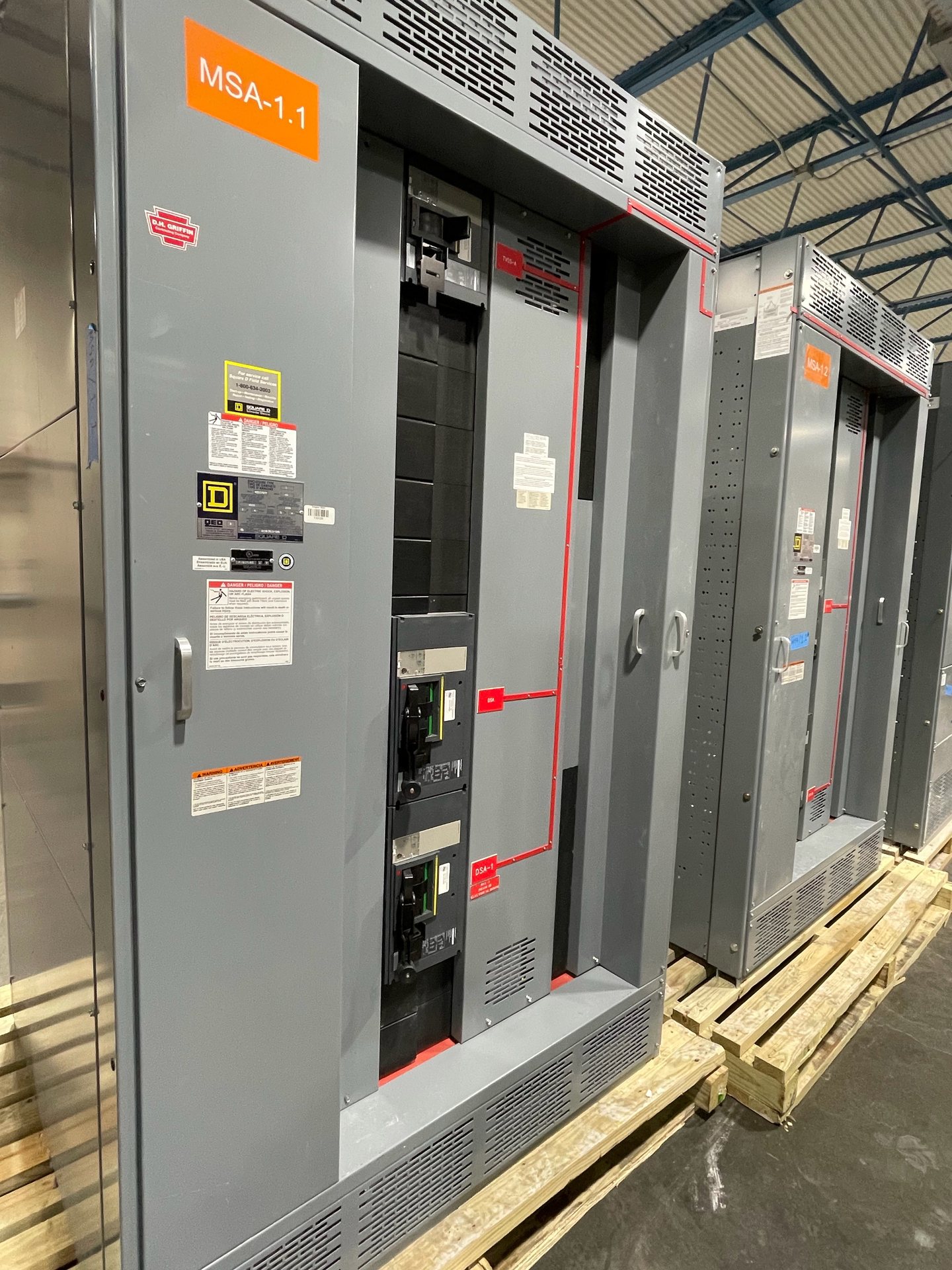
Two ratings, two objects
A specifically labeled main-bus continuous-current rating describes the bus identified by that marking; a breaker’s amp rating applies to the individual device as identified on its own nameplate. Preserve the label’s exact wording and qualifiers, and record the two separately. An assembly plate may contain an amp figure without clearly calling it a main-bus rating: do not relabel an ambiguous value or infer what it means.
Neither rating proves the other. A breaker marked with a given amp rating does not establish the bus rating, and an assembly bus rating does not confirm the amp rating of every breaker installed in it. For a buying review, this distinction matters even when the numbers happen to match. Treat each mark as evidence about only the equipment it identifies, and avoid filling gaps by inference.
Capture the assembly nameplate
Start with an existing assembly nameplate photograph or authorized record. Note the maker, model or catalog identifiers, serial number if available, and any specifically labeled bus amp rating exactly as shown. Preserve units, wording, and qualifiers instead of converting or paraphrasing them. If the label is absent, damaged, obscured, ambiguous or unreadable, state that plainly; do not substitute a breaker label or an old drawing as though it were the assembly plate.
A switchgear lineup may contain multiple sections, and available paperwork may refer to a lineup, a section, or a modified configuration. Record where the assembly label appears and what portion of the equipment it seems to identify, without asserting a scope that cannot be verified. A photo or document can help explain what is visible, but it may be incomplete or outdated. Keep observations distinct from assumptions about the installed assembly.
Explore related information: We Buy Used & Surplus Switchgear.
Log each breaker separately
For each breaker being represented, record its own readable nameplate details, including the amp rating and identifying information such as manufacturer, type, model, or serial number when present. Identify its location in the lineup in ordinary terms if that can be done from existing labels or records. The goal is to link each rating to a specific device, not to create a complete electrical schedule from uncertain information.
Do not assume that breakers in one lineup share a rating because they look alike, occupy similar positions, or appear in the same photo. Replacements and changes may not be reflected in older records. If a breaker plate cannot be read or its identity is unclear, mark that item unknown rather than assigning it the bus rating or the rating of a neighboring breaker. No seller testing is required for a purchase review; report what is documented and visible, and leave unverified details unclaimed.
Keep evidence and uncertainty apart
A useful inventory separates direct observations from supporting records. For example, list the bus rating as read from the assembly plate, then list each breaker rating from that breaker’s plate. In another field, note whether a value came from a drawing, schedule, photograph, or prior inventory. This makes it clear which details are nameplate-confirmed and which depend on paperwork that may describe an earlier arrangement.
When photographs are partial or labels are hard to read, say so. Do not infer a missing digit, assume a unit, or treat a document as current merely because it names the same equipment. If equipment is decommissioned, its present markings and historic records may not tell the same story; preserve both sources and flag the discrepancy for review. Do not touch or open equipment to obtain information. Leave any access or inspection work to qualified personnel.
Explore related information: Nevada Breaker Buyer.
What ratings do not establish
A bus amp rating and a breaker amp rating do not, by themselves, establish the condition, completeness, suitability, or value of the switchgear. They also do not verify that a particular breaker belongs in a particular position or that the assembly remains in its documented configuration. Avoid using one figure as shorthand for the entire lineup. A clear record of what each plate says is more useful than a broad claim that the gear is a certain amp rating.
Other details may matter to a buyer’s assessment, including the equipment’s identifiers, configuration, visible condition, completeness, and available records. Those details should be reported only when known, with uncertainties stated rather than resolved by guesswork. An offer is not a promise that every item will be accepted or that any particular value follows from a marked rating. The buyer may consider used, surplus, or decommissioned switchgear, including equipment from data centers or shut-down power plants.
Prepare a clear sale record
A compact schedule can make a mixed lineup easier to review: one assembly entry for the bus nameplate, followed by individual breaker entries tied to their own labels. Include available photos and documentation, but identify their source and any gaps. If the equipment has been altered or its history is uncertain, describe that plainly. This gives a buyer a basis to ask focused questions without presenting an unverified rating as fact.
The company buys equipment and can make cash offers with payment upfront; sellers do not need to test equipment. All voltage classes are considered, but that does not guarantee acceptance of every item. The buyer covers freight and handles crane, rigging, disconnects, loading, freight, and hauling, coordinating the work so the seller’s role is limited to getting paid. Share known access, ownership, and site constraints early, especially for a closure or decommissioning. Do not move or open equipment for the sale; qualified personnel should handle any required site work.