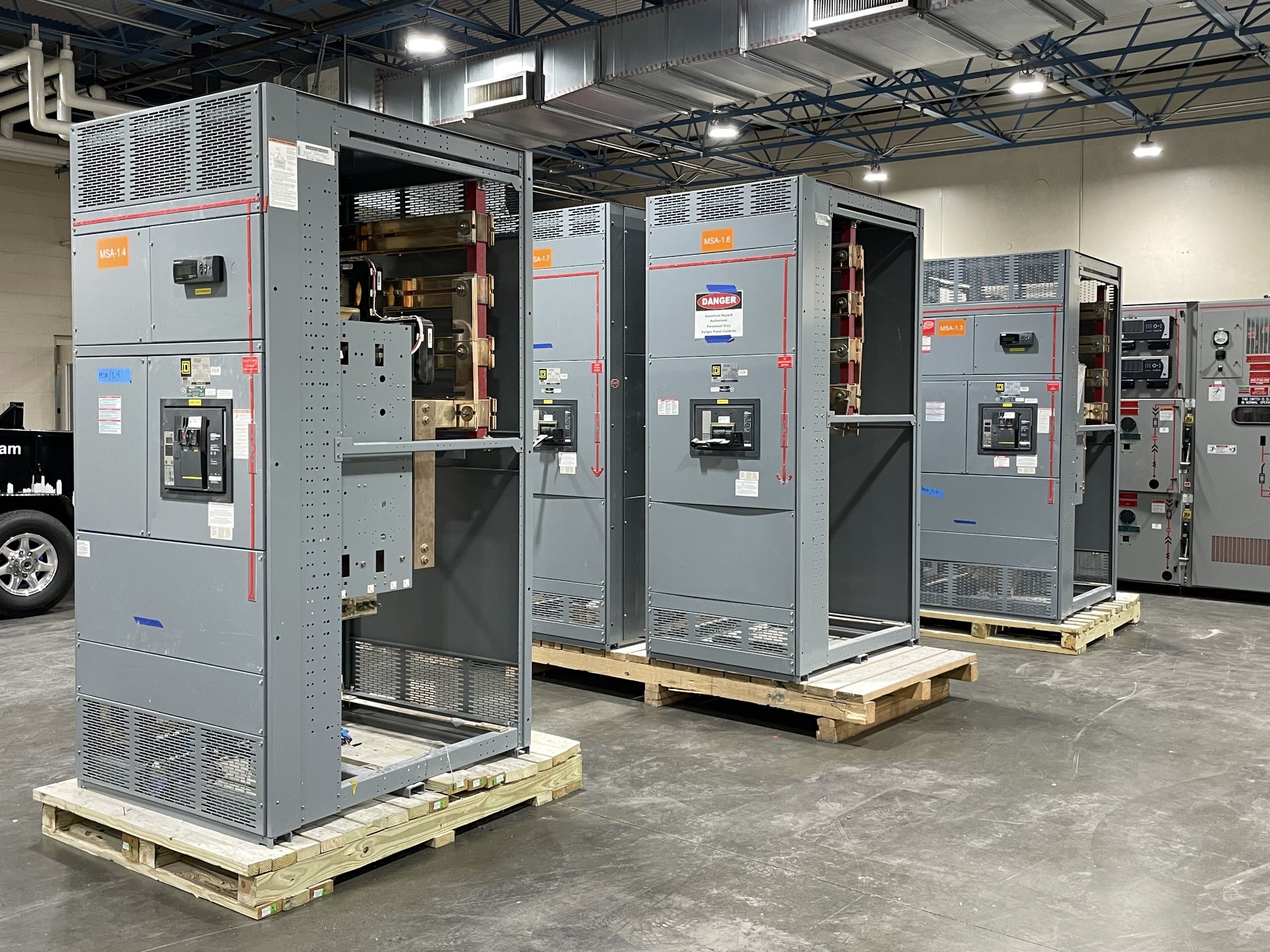
Two ratings, two roles
The frame rating identifies the breaker’s frame size or rating class: a characteristic of the breaker platform, not necessarily the current rating of its installed trip unit. Trip or sensor markings identify a different feature associated with how the device senses or responds to current. On some breakers, the trip unit or sensor rating is lower than the frame rating; the two figures are not interchangeable. For example, a frame marked 800 A does not by itself establish that the breaker is fitted with an 800 A trip unit. Record the markings as separate observations, including their labels and units, rather than reducing them to one amperage.
These markings can support identification, but they do not establish a breaker’s present condition, complete configuration, interrupting rating, or suitability for a particular application. Nor does a frame and trip figure alone reveal whether settings are fixed, adjustable, or currently set to a particular value. A buyer can review information provided about the equipment and make an offer, but an offer is not a promise to accept every device or a conclusion about its value.
Capture the label, not a guess
For a useful record, transcribe the frame and trip or sensor markings exactly as shown, preserving abbreviations, numbers, and units. Note whether a figure appears on the breaker nameplate, trip-unit label, or another visible marking; where it is located can help distinguish the device’s frame designation from its trip-related information. Include manufacturer and model identifiers only when legible, and distinguish a printed marking from a value supplied from memory or an old inventory. If a label is obscured, missing, or difficult to read, say so instead of filling in a likely value.
Pictures can help, but they should not be treated as a complete specification. A photograph may omit a secondary label, show only part of a device, or fail to make small text readable. Old records may describe a previous configuration rather than the breaker as it stands now. Share available photos and documentation with clear notes about what is confirmed and what is uncertain. Do not touch or open a breaker to obtain a better view; leave access and inspection to qualified personnel.
Explore related information: We Buy Used & Surplus Switchgear.
Do not infer settings
A trip-unit or sensor rating is not necessarily the breaker’s active pickup setting or a complete account of its protection behavior. Some designs may have adjustable features, but a frame marking, sensor value, or trip-unit rating does not tell a buyer which settings are selected. Do not describe a setting as confirmed unless reliable documentation supports that statement. Likewise, avoid treating the word “sensor” as proof of a particular trip arrangement or functionality; the exact device and its documentation matter.
This distinction is especially useful when an equipment list contains only one ampere figure. That number might represent frame size, a sensor or trip-unit designation, or another rating entirely. If its source is unclear, label it as an unverified listing value and provide the visible markings separately. A buyer can then assess what information is available without relying on a seller to infer settings, conduct a test, or certify operation. If details cannot be established from safe, available records, state that limitation plainly.
Keep device and assembly ratings separate
A breaker is an individual device; a switchgear lineup or other assembly has its own identification and ratings. A breaker’s frame or trip marking does not establish the rating of the full assembly, and an assembly rating does not identify the frame or trip configuration of every breaker installed in it. In a lineup with multiple devices, record each breaker separately where information is available, then preserve the assembly nameplate details as a separate record. Avoid copying one breaker’s figure across a whole section or presenting a lineup rating as the rating of an individual device.
For surplus or decommissioned equipment, configurations may have changed over time. A drawing, schedule, or equipment label can be incomplete or out of date, so identify whether a detail comes from a current visible marking or from historical paperwork. If a breaker appears to be associated with a particular cubicle or section, describe that association only as observed or documented. This careful separation helps prevent a buyer from treating a partial record as a complete account of the equipment being offered.
Explore related information: Nevada Breaker Buyer.
What details help a purchase review
Alongside frame and trip or sensor markings, provide any available overall equipment identification, the number of breakers, visible manufacturer and model text, and the general context in which the units are being offered. For a breaker removed from an assembly, note that it is separate if known; for breakers still installed, describe them as installed rather than assuming they are ready for removal. Make clear whether quantities and labels have been counted or merely estimated. These details help distinguish one device from another when several breakers share a frame size but differ in trip-unit information.
The company buys used, surplus, and decommissioned electrical equipment, including switchgear from decommissioned data centers and shut-down power plants. It may consider breakers across all voltage classes; voltage does not replace the need to document frame and trip markings accurately. No seller testing is required. A review may lead to a cash offer with payment upfront, but acceptance and value depend on the equipment and information presented. Do not promise that every piece will be accepted or assign it a value based on a rating alone.
Make the handoff low-effort
A seller does not need to test, disconnect, rig, lift, load, or transport equipment for the purchase. The buyer covers freight and handles the necessary crane, rigging, disconnects, loading, freight, and hauling arrangements. The seller’s role is to provide truthful information about what is known, identify unknowns, and coordinate access with the people responsible for the site and equipment. This can be particularly helpful when breakers remain in switchgear during a closure or decommissioning project, where access and ownership may involve several parties.
Before a potential transaction, clarify which equipment is included and who has authority to release it; do not assume a breaker belongs to the party providing the inventory. Share the frame and trip or sensor details as observed, along with any limitations in photos or records. Leave equipment untouched and unopened, and leave any electrical work to qualified personnel. Accurate distinctions make review more practical: frame size identifies one feature, trip or sensor markings describe another, and neither alone settles condition, settings, acceptance, or value.