Start with the recorded designation
Use the equipment’s own nameplate, available drawings, or other records to establish whether it is designated metal-clad switchgear. Copy the wording as it appears, including the manufacturer name, model or type, lineup identification, and any stated ratings. Do not replace an unclear designation with a guess based on a photograph. An enclosure may look substantial and compartmented without being confirmed as metal-clad switchgear; appearance alone cannot establish its construction or classification.
Keep transcription separate from interpretation. If a label is faded, partly obscured, or missing, say so and share only the text you can read. Old documentation may describe a lineup as originally supplied, not its present configuration. Note when a record is undated or does not clearly correspond to the equipment being offered. Honest gaps help a buyer assess what can be identified, without presenting uncertain details as verified facts.
Describe the lineup and its sections
A metal-clad lineup may consist of multiple adjacent assembly sections arranged as one switchgear assembly. Record the number of sections you can identify and any section labels shown on drawings or nameplates. If the lineup appears incomplete, has been separated, or includes gaps, describe that plainly rather than implying it remains a complete assembly. A count of visible vertical sections is useful context, but it does not by itself verify the original lineup arrangement or electrical configuration.
Section-level information and assembly-level information are not interchangeable. A drawing may show the overall assembly designation while individual section labels identify positions or functions. Preserve those distinctions when summarizing the records. If documents conflict, quote or describe each source and flag the discrepancy for review. Do not infer that adjoining sections belong together merely because they stand side by side, or that a missing section is unimportant to the lineup.
Explore related information: We Buy Used & Surplus Switchgear.
Record compartments without assumptions
Metal-clad is a specific kind of metal-enclosed switchgear. IEEE metal-clad construction includes grounded metal barriers separating major compartments and drawout switching devices, but an exterior image does not establish that an unknown lineup meets the designation. Use reliable records for the names and arrangement of compartments. Note unreadable or unidentified labels, and do not open an enclosure to inspect its interior; leave any examination to qualified personnel.
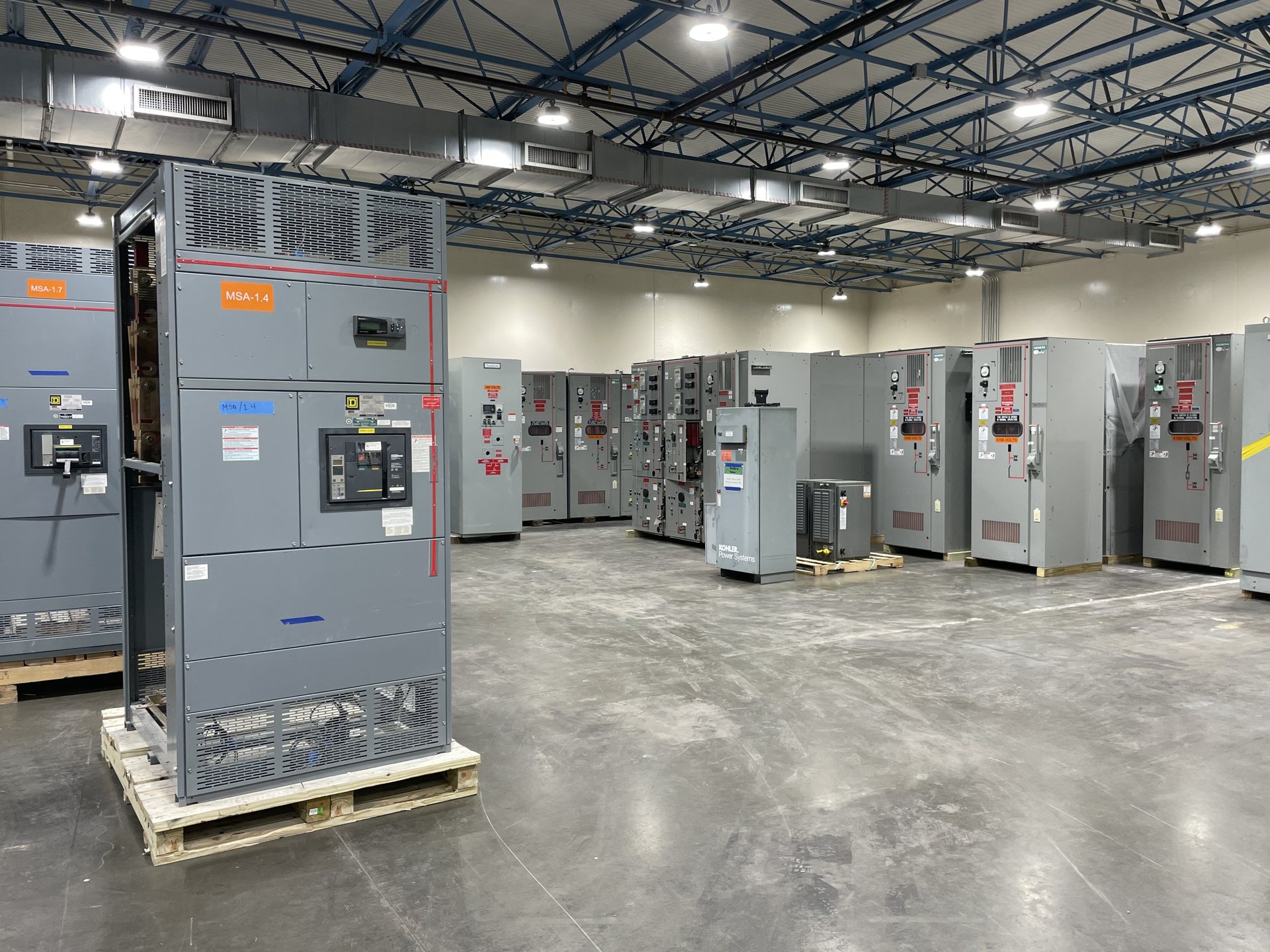
Existing photographs can help show exterior layout, doors, labels, and the relationship between sections, but they may not reveal internal construction or establish a classification. Use images as supporting evidence, not a substitute for a designation. If the available pictures show only fronts or ends, say that the view is limited. A buyer can review what is supplied and identify which equipment records correspond to the views.
List breakers separately
Identify breakers as individual devices rather than folding them into a single lineup description. Record the quantity you can account for, any visible device nameplates, and the section or position where records place each breaker. Include stated type, ratings, or other markings only when they are legible and clearly tied to that device. A breaker’s rating is not automatically the rating of the complete switchgear assembly, and an assembly rating should not be assigned to every breaker.
Be explicit about what is physically present versus what appears only in a drawing, schedule, or prior inventory. If breaker quantities do not match the documents, state both counts and the source of each. Do not conclude that a breaker fits a position, is interchangeable, or is suitable for service from a shared number or visual resemblance. These distinctions help a buyer understand which equipment is actually being offered.
Explore related information: Nevada Medium-Voltage Switchgear Buyer.
Separate facts from unknowns
A useful offer description distinguishes confirmed details, observations, and unresolved questions. For example, identify a readable assembly nameplate as confirmed, describe an exterior feature as observed, and mark an unverified original configuration as unknown. Mention whether records are complete, partial, or of uncertain age. Where a label or drawing gives a rating, reproduce its wording and identify whether it applies to the assembly or a specific device; do not infer operating condition from that rating.
Represent condition and completeness truthfully, including missing breakers, blank spaces, removed sections, or uncertain ownership where relevant. Do not describe equipment as complete, operational, or ready for use unless that status is supported and appropriate to state. If equipment is energized, damaged, or otherwise presents a safety concern, do not touch it or open it; leave any work to qualified personnel.
Offer the equipment and coordinate removal
When submitting an offer request, provide the designation and records you have, clear exterior photographs, the section count, and a separate breaker inventory. Explain whether the lineup is assembled, separated, or missing known items, and identify any uncertainty about access or ownership. These particulars allow a buyer to review the actual offering rather than assume a standard configuration. An offer is not a guarantee that every section or breaker will be accepted, nor does the designation alone establish a particular value.
For equipment it agrees to purchase, the company makes cash offers and pays upfront; the buyer covers freight and handles crane, rigging, disconnects, loading, and hauling, so the seller does not perform those tasks. No testing is required from the seller, and all voltage classes are considered. Discuss site access, ownership, and removal scope for coordination; do not touch or open equipment, and leave any necessary work to qualified personnel.