Confirm what is truly spare
A breaker kept on site as a replacement is not automatically available for sale. First distinguish loose spare devices from breakers installed in, allocated to, or reserved for equipment that remains in service. A removed breaker may still belong to a retained lineup, while an unopened carton may contain the only planned replacement for a critical position. Confirm ownership and intended use with the people responsible for the facility’s equipment records before presenting anything as surplus.
A useful inventory marks each item’s status plainly: loose and released, assigned to retained equipment, or uncertain. Do not combine those categories in a single count. If a breaker’s status cannot be confirmed, identify that uncertainty rather than treating it as saleable stock. An offer is based on review of the described equipment; it does not mean every listed device will be accepted.
Group by verified identity
For loose spares, organize groups around the actual catalog number shown on the device or its reliable documentation. Keep different catalog numbers apart even when breakers look alike. Record frame and trip-unit information when it is legible and verified, and note mounting style only when known. These details help distinguish devices that might otherwise be mistaken for interchangeable items; appearance alone does not establish that two breakers match.
Preserve the original wording and punctuation of catalog markings where possible, and flag labels that are damaged, partial, or difficult to read. A photograph can support an inventory, but it may not show every identifying mark or reveal what is inside a package. Older records may refer to a previous configuration. Report discrepancies between label, paperwork, and visual appearance instead of resolving them by assumption.
Explore related information: We Buy Used & Surplus Switchgear.
Keep assembly ratings separate
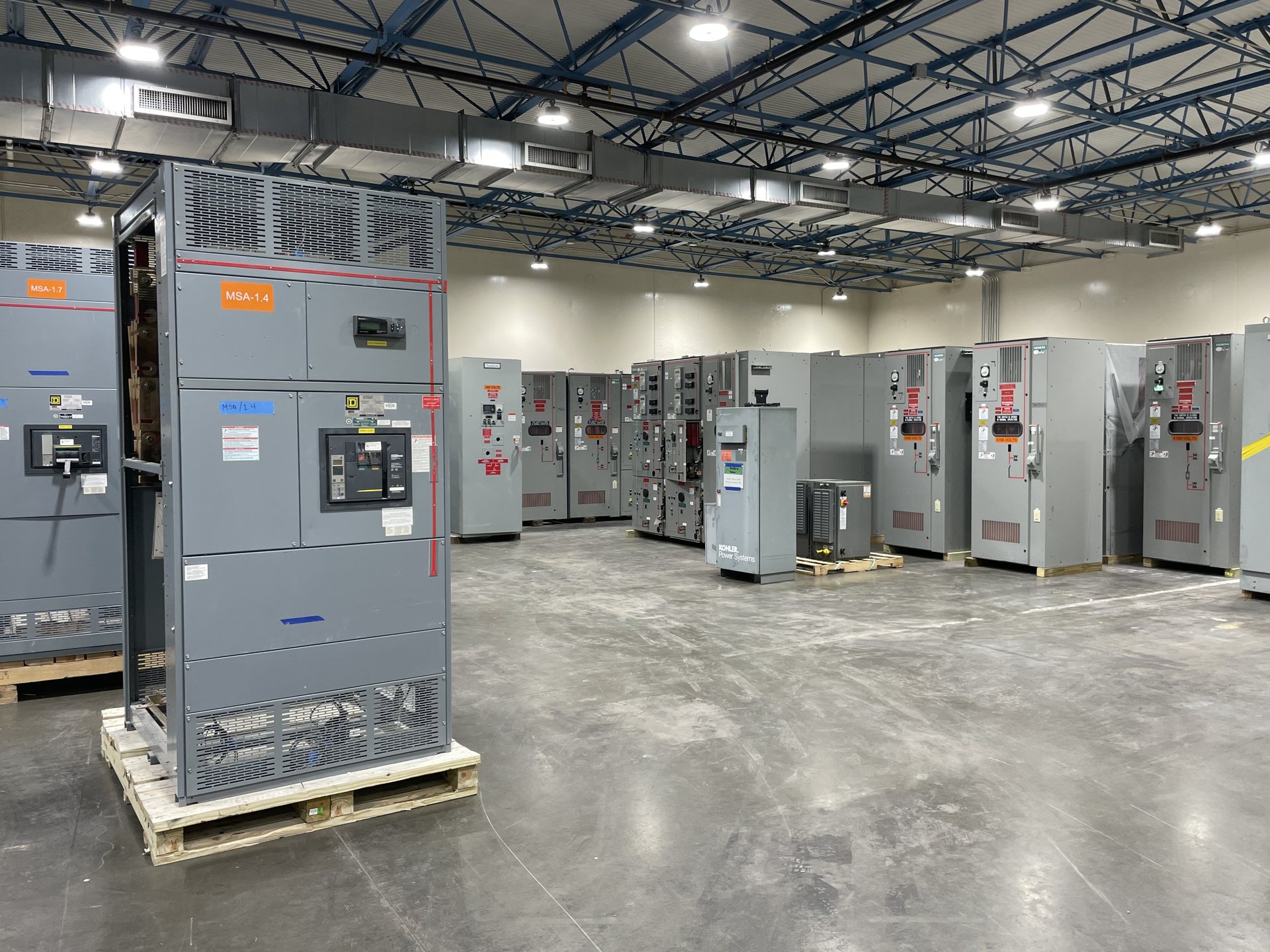
A switchgear lineup or other assembly can carry ratings that do not describe an individual spare breaker. Do not assign the assembly’s voltage, current, or interrupting information to a loose device unless the breaker’s own marking or dependable device-specific records support that description. Likewise, a breaker’s rating does not by itself establish the rating or suitability of the assembly where it may once have been used.
For an inventory, keep device markings separate from lineup identification and system-level information. If a spare was removed during the upgrade, its former position may help explain its history, but it does not prove the device’s present condition or intended application. Where the available evidence is incomplete, label the detail unknown. Accurate limits are more useful than a confident-sounding description that cannot be substantiated.
Describe condition without testing
The seller does not need to test breakers for a buying review. Share observable facts instead: whether the device is loose or packaged, whether labels are readable, and whether any visible damage or missing parts are apparent. Do not infer operational condition from a clean exterior, storage history, or a prior service record. If a detail cannot be verified safely and reliably, say so rather than presenting it as confirmed.
Do not touch or open equipment to collect information, and do not energize a breaker or attempt a test. Leave any inspection or work requiring contact with electrical equipment to qualified personnel. Photos and existing records can be useful, but they should be represented as partial evidence, not a substitute for facts that are unavailable. Clear disclosure lets a buyer assess the opportunity without asking the seller to perform electrical checks.
Explore related information: Nevada Breaker Buyer.
Make the upgrade inventory usable
A focused list is easier to review than a broad count of “miscellaneous breakers.” Use one line per verified catalog-number group, with quantities and separate fields for frame, trip unit, mounting, and known condition. Add the facility location as context, but do not imply that the location proves a device’s origin, history, or present ownership. If the inventory includes breakers from more than one source or storage area, keep those groups distinct when that information is known.
An upgrade can leave old schedules, labels, and photographs that no longer align. Note which source supports each identifying detail when useful, and call out conflicts rather than silently choosing one version. If exact identity is unknown, a partial description is still helpful when clearly marked. The aim is not to reconstruct a complete equipment history; it is to give an accurate account of the loose surplus being offered and the limits of what is known.
Arrange sale and removal
Once the loose spares and their details are presented for review, the buyer may make a cash offer. Payment is upfront, and the seller is not required to test the breakers. An offer is not a promise to accept every device or to assign value to each item. Keep the items under review separate from breakers reserved for retained equipment until acceptance and the sale scope are clear.
The buyer covers freight and handles the agreed logistics, including crane, rigging, disconnects, loading, freight, and hauling where applicable. The seller does not need to rig, lift, disconnect, or move the equipment; the seller’s role is to provide accurate information and coordinate access and ownership matters. Do not touch or open electrical equipment. Any required site work should remain with qualified personnel, with responsibilities and access arranged for the specific items being sold.