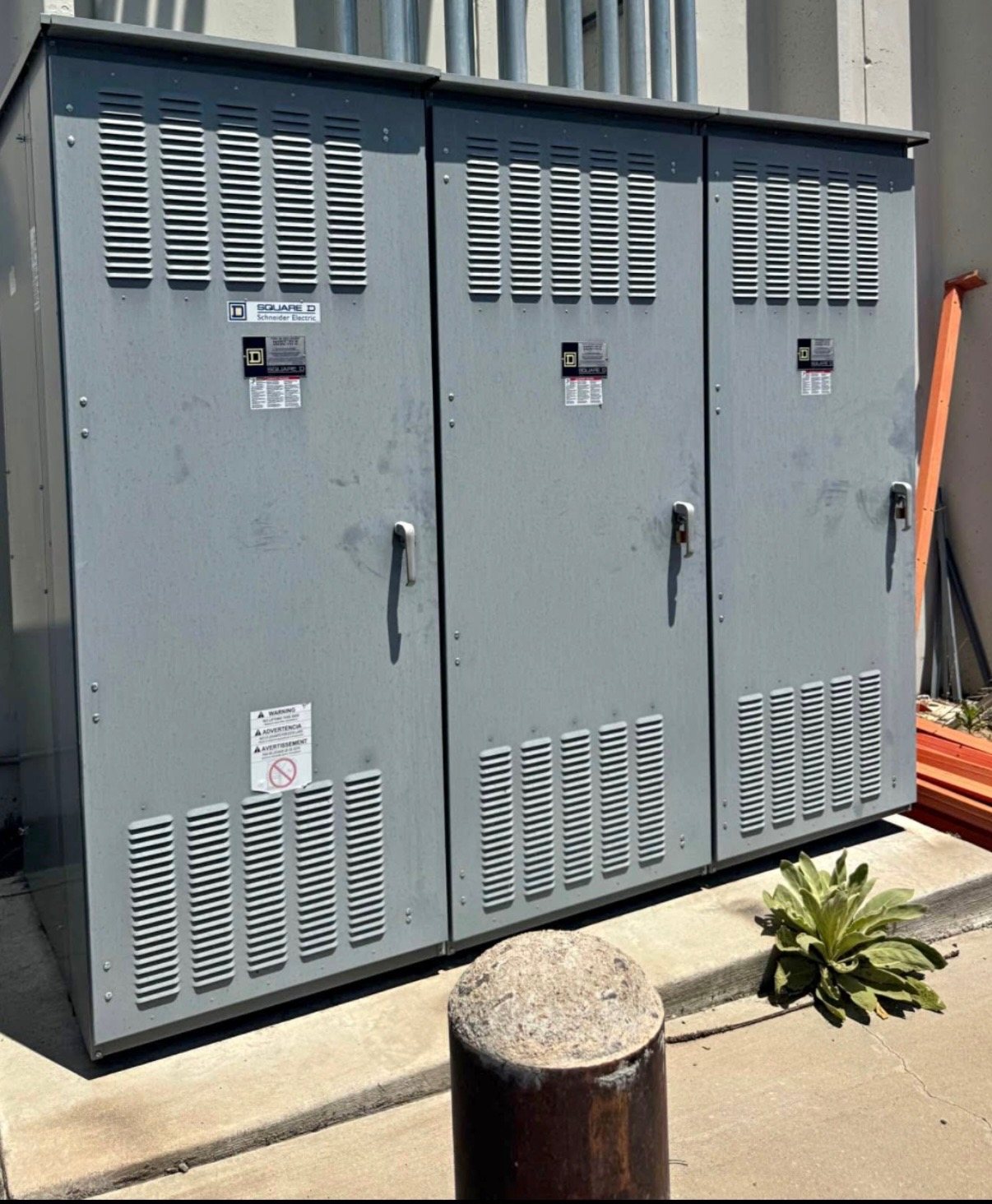
Start with the lineup label
Look for the lineup’s identification label and record its wording as shown, including Siemens and WL where present. Capture other visible fields such as model or type, serial or identification number, assembly ratings, and any date information, but do not fill gaps from memory. A clear record of the label helps distinguish the complete switchgear lineup from one device associated with it.
A label may be absent, obscured, damaged or difficult to read. Note that limitation rather than guessing or treating an old drawing as proof. A photograph or document can support an inquiry, but it may not show later changes or the present configuration. If details cannot be verified safely, report them as unknown; do not touch or open equipment to find them. Leave inspection to qualified personnel.
Describe the section arrangement
Give a concise account of the lineup’s visible arrangement: how many sections appear to be present, their order, and any plainly identifiable differences in function or layout. If sections have labels, note their wording. This is more useful than calling the entire assembly “WL” alone, because a lineup can contain multiple sections and devices, while a brand or family name does not fully describe what is included.
Keep observation separate from interpretation. A visible door, compartment label or blank-looking section does not establish what is inside, whether it is complete, or whether it belongs to the original lineup. Record apparent gaps, additions or mismatches as observations, not conclusions about condition or suitability. Never open an enclosure or move equipment to improve identification; if the arrangement is uncertain, say so in the offer inquiry.
Explore related information: We Buy Used & Surplus Switchgear.
List known breaker types
Where breaker information is already available from visible labels or existing records, list the known types and quantities, and note which section each is associated with when that relationship is clear. Include legible model designations and nameplate details as written. A WL breaker may be part of a switchgear lineup, but a loose Siemens WL breaker is not, by itself, proof that a complete WL switchgear assembly is present.
Do not infer breaker type from a family name, appearance, or a partial label. Nor does identifying a breaker establish that it fits or can be used in a particular section. No interchangeability or compatibility conclusion follows from the Siemens or WL designation. Report missing, unreadable or unverified breaker details directly, and do not remove a breaker or open equipment for identification. The buyer can consider the information supplied without requiring seller testing.
Separate assembly from loose equipment
Make clear whether the item offered is a lineup, a partial lineup, or one or more loose breakers. For a lineup, describe the sections believed to be included and any known omissions. For loose devices, identify them as loose equipment and provide their visible labels separately. This distinction prevents a breaker’s WL marking from being mistaken for evidence that the surrounding switchgear is included.
Ownership and scope matter, especially when equipment remains at a closed facility or is being removed as part of a larger decommissioning. Confirm what the seller is authorized to offer and what is included in the sale; do not assume nearby sections, spares, or documents are part of the lot. The buyer purchases used, surplus and decommissioned electrical equipment, including switchgear from shut-down power plants and decommissioned data centers, subject to review. A submitted identification is not acceptance of every piece.
Explore related information: Nevada Low-Voltage Switchgear Buyer.
Share evidence, not assumptions
Useful supporting information can include existing label photographs, a section list, prior inventory records and drawings that are already available. Identify each item’s source and date if known, and explain when a record may describe an earlier configuration. Pictures can omit rear, internal or changed details, and old documentation may not match the equipment now present. Treat both as clues, not guarantees.
Keep unknowns visible in the record: unreadable ratings, uncertain section counts, unconfirmed breaker quantities, or unclear completeness. Avoid turning a partial label into a complete model description. No testing is required from the seller, and the seller should not touch or open equipment to gather information. If the condition or configuration needs professional assessment, leave that work to qualified personnel and state what has not been established.
Plan the offer and removal scope
Send the recorded identification, arrangement, known breaker details, and any supporting material together, with a candid note about what remains uncertain. The buyer reviews the information and may make a cash offer with payment upfront; an offer does not guarantee acceptance of every section or breaker, nor promise a particular value. Siemens and WL are equipment identifiers here, not evidence of affiliation, endorsement, authorization, or an assurance of compatibility.
If the equipment is accepted, the buyer covers freight and handles the agreed removal logistics, including crane, rigging, disconnects, loading and hauling. The seller does not need to test, rig, lift, disconnect or move the equipment. Share relevant access constraints, ownership boundaries and site coordination requirements so the removal scope can be considered. Do not handle or open equipment; leave any required site work to qualified personnel.