Start with the lineup drawing
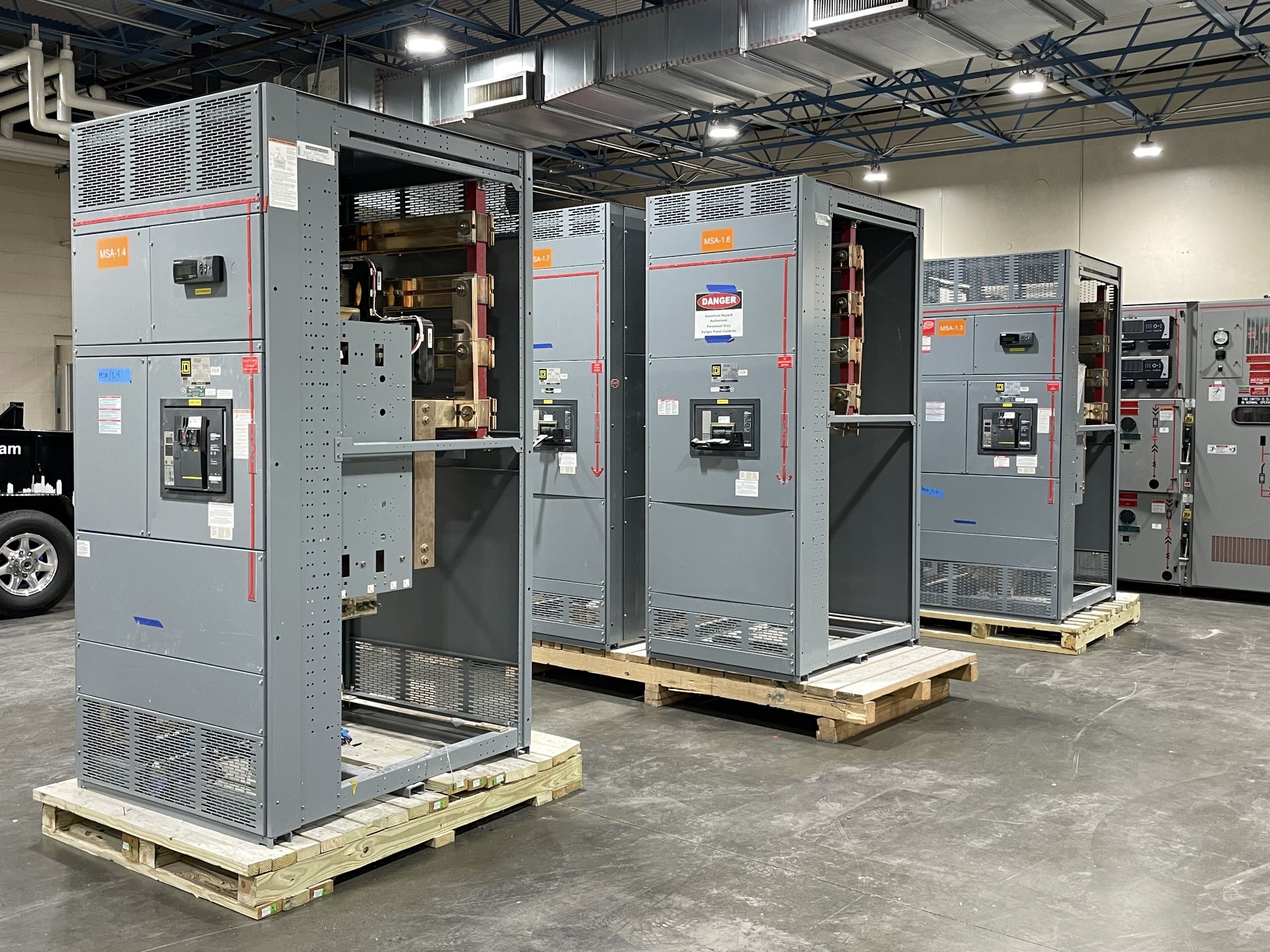
Locate the latest lineup drawing, elevation or switchgear schedule available for the GM-SG assembly. Use it to record the documented section sequence from end to end and the labels assigned to each section. Preserve the drawing’s original designations rather than replacing them with informal descriptions; matching those labels to the visible lineup helps a buyer compare the inventory with the records without assuming every document is current.
Drawings may show an intended arrangement rather than the equipment’s present configuration. Note whether a sheet is marked as-built, revised or otherwise dated, and identify any apparent differences as unverified instead of silently correcting the record. A missing page or unclear section label is useful information too. The goal is an honest map of what is present, with uncertainty plainly stated, not a claim that the drawing proves condition or compatibility.
Record the assembly nameplate
Use an existing nameplate photo or authorized documentation to record the metal-clad assembly as a distinct inventory item. Include readable manufacturer and model wording, assembly identification, and the ratings or other fields shown, without inferring details that are obscured or absent. Keep the nameplate associated with the lineup it identifies. If no record is available, do not approach equipment for a photograph; leave any necessary access to qualified personnel.
A lineup-level rating describes the assembly as identified on its plate; it should not be treated as the rating or condition of every individual breaker. Nor does a model name alone establish a particular configuration, suitability for a system, or compatibility with other equipment. If a plate is damaged, inaccessible or unreadable, report that limitation. Do not open enclosures or touch equipment to retrieve information; leave any necessary access or site work to qualified personnel.
Explore related information: We Buy Used & Surplus Switchgear.
Separate breaker positions from identities
Use the drawing to list each breaker position by section and position designation. Then record the breaker’s own visible identification separately, where it is already available in the seller’s records or safely visible to personnel authorized to document the equipment. This distinction matters: a lineup can identify a breaker position while the installed device has a separate nameplate, model, serial number or rating.
Avoid treating a position label as proof of the breaker’s identity, or assuming a breaker now occupies the position shown on an old drawing. If documentation and visible information disagree, retain both descriptions and mark the discrepancy for review. If a position is empty, or a breaker is stored separately, make that distinction explicit. The buyer assesses the information provided; an inventory entry is not a promise that every device will be accepted or assigned a particular value.
Build a traceable inventory
Create a simple cross-reference that ties drawing section labels to assembly photographs and any available breaker records. Include the document date or revision when shown, and use consistent filenames or captions so a reader can tell which image corresponds to which section. Wide views can establish lineup order; close views may help read existing identification. Do not present a cropped image as if it captures the whole assembly or omit a known mismatch.
A useful inventory also says what is not known: whether a record reflects the present arrangement, whether a breaker identity is legible, or whether additional components are included. Do not infer completeness from a photograph or old paperwork. Siemens and GM-SG identify equipment for inventory purposes only; they do not indicate affiliation, endorsement, authorization or an assurance of compatibility. The buyer may consider documented equipment, but an offer is not a commitment to purchase every listed item.
Explore related information: Nevada Medium-Voltage Switchgear Buyer.
Describe scope and site status
State whether the inventory covers a complete lineup, selected sections, breakers stored separately, or a mixture. Clarify ownership and whether equipment is part of an active facility, a decommissioned data center or a shut-down power plant. These distinctions can affect what is being offered and who can authorize a sale. If the site is closing or space is constrained, describe access limitations and coordination needs at a high level rather than assuming the equipment is ready to move.
Do not touch, open, disconnect or attempt to test switchgear for an inventory. No seller testing is required for a review. If equipment remains installed, leave site work to qualified personnel and identify the appropriate contact for access and coordination. Share known restrictions and unknowns candidly; the buyer can discuss whether the scope is workable without asking the seller to perform handling tasks.
Plan the transaction around the equipment
For Nevada sellers, the buyer purchases used, surplus and decommissioned electrical equipment and can consider Siemens GM-SG inventory across voltage classes. The company makes cash offers and pays upfront; the seller does not need to test the equipment. An offer depends on the items and information reviewed, and does not guarantee acceptance of each section or breaker, or a particular value. Manufacturer and model references identify the equipment under consideration, not a sales or service relationship.
The buyer covers freight and handles crane, rigging, disconnects, loading and hauling, coordinating the required work so the seller’s role is to provide accurate information and receive payment. Do not move or prepare the lineup yourself. Before agreeing on scope, make sure the drawing-based section list, separate breaker identities and any known discrepancies are represented truthfully. When records are incomplete, say so; clear limits are more useful than unsupported certainty.