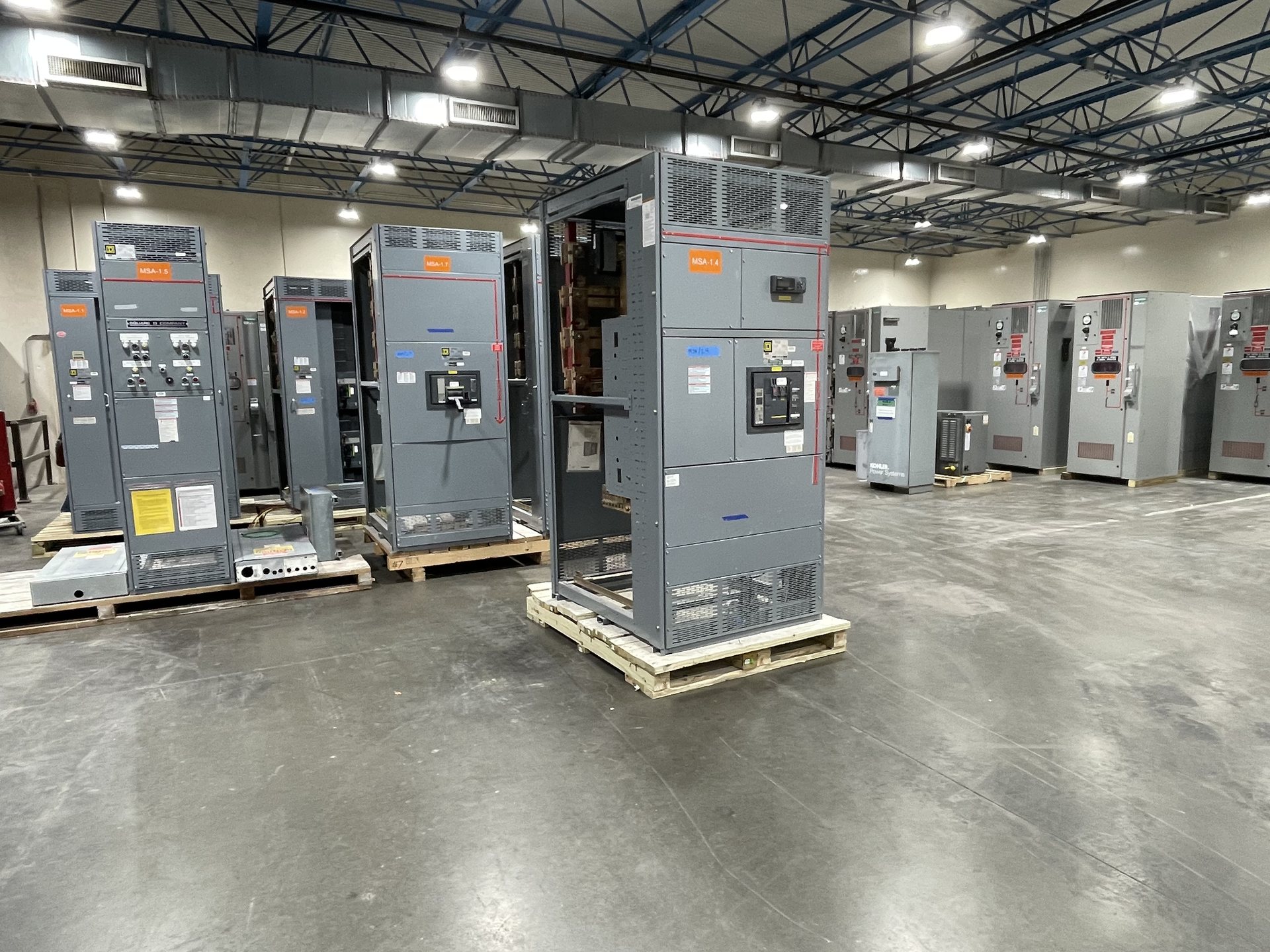
Start with the recorded designation
Look first for the equipment’s nameplate, drawing title, purchase record or maintenance documentation. The term “metal-enclosed” describes an assembly enclosed in metal; it does not, by itself, confirm a more specific construction classification. A familiar cabinet shape, compartment arrangement or older sales description is not enough to recategorize it. When a record says metal-enclosed, report that wording and provide the source or image if available. If the designation is missing or conflicting, say so rather than selecting the most specific-sounding label.
Metal-clad is a specific kind of metal-enclosed construction, not a synonym for every metal-enclosed lineup. IEEE metal-clad equipment includes grounded metal barriers between major compartments and drawout switching devices. Do not infer that an unknown lineup meets that designation from doors or withdrawable-looking components in a photograph. Share existing legible nameplate details and drawing references, while marking uncertain readings as uncertain. A buyer can review the description without the seller resolving an undocumented classification.
Describe the lineup without guessing
Record the lineup as a set of sections or units only to the extent that the available records establish it. Useful confirmed details may include the designation, manufacturer as shown on the plate, model or catalog reference, serial number, assembly ratings and the number of sections. Keep assembly-level information distinct from the labels of individual devices. A lineup record may describe the overall assembly, while a breaker or fuse label describes a separate device; one rating should not be presented as though it describes both.
For switches, fuses and breakers, inventory only what records, readable labels or reliable site documentation establish. Note whether the record identifies a device type, quantity, rating or catalog number, and say when a detail is not visible or has not been verified. Do not count a closed compartment as proof that a particular device is inside, or assume a photographed component belongs to the lineup being offered. A concise “unknown” is more useful than a confident but unsupported device list, especially when drawings may be old or incomplete.
Explore related information: We Buy Used & Surplus Switchgear.
Use photos and records carefully
Photographs can help show the lineup’s exterior, overall extent and visible nameplates, but they cannot establish every internal feature or confirm that an old drawing still matches the installed equipment. Provide images already available and identify what each one depicts. If a plate is obscured, damaged or unreadable, report that plainly. Do not open an enclosure or touch equipment to improve a photo or search for a label; leave any site work to qualified personnel and follow the facility’s safety rules.
Compare available documents for consistency without silently combining them into one definitive description. A drawing may identify a planned arrangement, while a later record may describe a changed lineup; neither necessarily proves the equipment’s present contents. Flag differences in section count, designation, device schedule or identifiers and state which source supplied each detail. If provenance is unclear, call it unverified. This gives a buyer a realistic basis for review and helps prevent a partial picture from becoming an overstated claim about the equipment’s construction, completeness or condition.
Clarify ownership and scope
Before offering a lineup, establish which sections and associated devices belong to the seller and are included in the proposed sale. In a decommissioned data center or shut-down power plant, equipment may be part of a larger closure or removal scope, and site records may cover assets beyond the specific assembly. Identify the boundaries using existing asset information where possible; do not assume adjacent cabinets, spare devices or loose components are included just because they appear nearby.
Share known access constraints and who has authority to approve a sale and coordinate work at the site. If the equipment remains connected, is scheduled for removal, or is subject to another party’s control, say what is known without attempting any disconnection or handling. The seller does not need to test, rig, lift, disconnect or move the switchgear for an inquiry. Keep the offer focused on the described equipment and disclose unresolved ownership or scope questions so they can be addressed before logistics are arranged.
Explore related information: Nevada Medium-Voltage Switchgear Buyer.
Make the offer reviewable
A practical submission pairs a short description with supporting records and clear limits on what is known. Include the recorded equipment designation, identifiers, section count when documented, and device inventory only when established. State whether ratings come from an assembly plate, an individual device label or a document, and identify missing or conflicting information. This lets a buyer assess the opportunity without treating a partial record as proof of a complete lineup or a particular condition.
The company buys used, surplus and decommissioned switchgear and may make a cash offer with payment upfront; an offer is not a promise to accept every piece or assign it a particular value. Sellers are not required to test equipment. All voltage classes are considered, but voltage alone does not establish acceptance or value. If records leave construction or contents uncertain, present the uncertainty directly. No seller-side testing is needed to make an inquiry, and unknown details should remain unknown rather than be filled in by guesswork.
Plan removal through buyer logistics
Once an offer and scope are agreed, logistics can be coordinated around the actual site and equipment. The buyer handles crane, rigging, disconnects, loading, freight and hauling, with the buyer covering all freight. The seller’s role is not to prepare the lineup physically or arrange its movement; the seller does nothing but get paid under the stated arrangement. Practical coordination still depends on clear access, ownership, site authorization and an agreed understanding of which equipment is included.
For a lineup at an operating or closing facility, share relevant access requirements, site contacts and known scheduling constraints so removal can be coordinated with the responsible parties. Do not touch or open the equipment, and leave electrical and removal work to qualified personnel. If the final visible scope differs from the records or initial description, disclose that before work proceeds. Accurate boundaries and honest uncertainty are especially valuable for metal-enclosed switchgear, where an external cabinet view cannot by itself settle the assembly’s designation or the devices inside it.