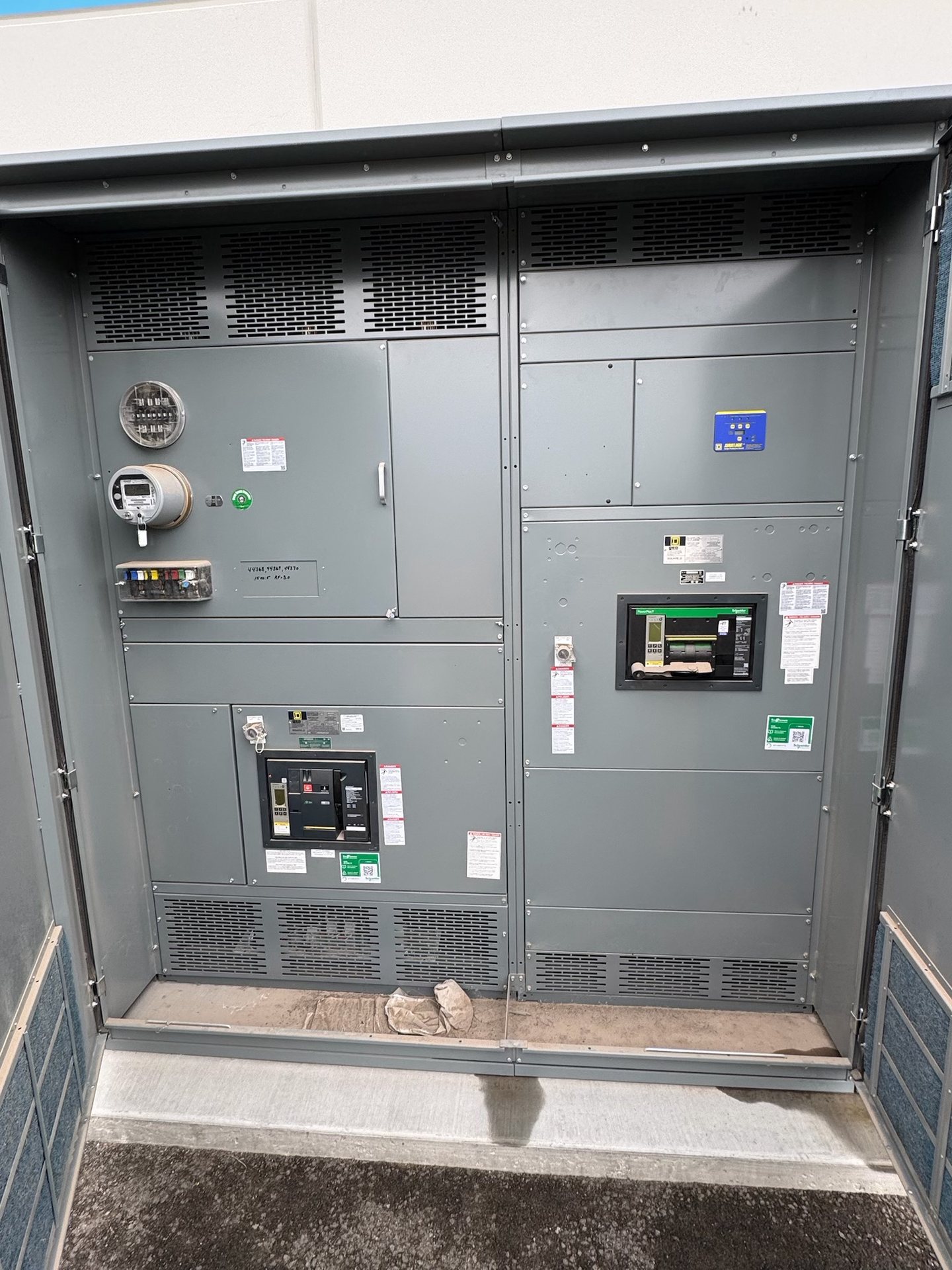
Start with the ownership boundary
A teardown drawing shows where equipment sits; it does not establish who owns it or whether it may be sold. Begin with an asset boundary list approved by the owner and the people authorized to direct the project. Identify equipment proposed for sale separately from property retained by the plant, a utility, a tenant, a lender or another party. Include equipment already removed from service as well as assets that may remain energized or support ongoing operations.
For each item, record the best-known location, identifying label, apparent function and ownership status. Mark uncertain entries as unconfirmed rather than treating a faded tag or an old inventory as proof. Resolve authority before requesting an offer: the buyer can consider equipment presented for sale, but an offer does not confirm ownership, acceptance of every listed item or a particular value.
Separate distribution from generation
Plant distribution may include switchgear and associated assemblies that route or protect electrical power. Generation equipment has a different role and may include generators, turbines and related machinery. Their physical proximity, common project numbering or connection on a one-line diagram does not make them a single saleable package. List distribution assets as their own scope, with nearby generation equipment explicitly noted as included, excluded or still under review.
That distinction matters in a teardown where a generator is retained, sold through another channel or subject to separate ownership terms. Describe what is actually offered, not what appears in a broad plant equipment category. If a switchgear assembly is offered without adjacent generation equipment, identify the assembly and its boundary as clearly as available records allow. Do not infer that connected equipment is included merely because it appears on the same drawing.
Explore related information: We Buy Used & Surplus Switchgear.
Keep controls in a separate line
Control systems can be interwoven with distribution while serving a distinct operational purpose. A plant may have control panels, wiring, instruments, communication equipment or system components that remain necessary to other assets. Give these items a separate line in the boundary list, and state whether they are offered, retained, excluded or not yet identified. Avoid using “electrical equipment” as a catch-all that silently expands the sale.
Records may not show whether a control component is dedicated to one assembly or shared across plant functions. Flag that relationship as unknown for the authorized project team to resolve; do not assume a panel can be removed or sold independently. Buyers may consider surplus electrical equipment, but a listing should represent the known scope honestly and leave unresolved dependencies visible rather than promising completeness or compatibility.
Identify retained utility assets
Utility-facing equipment deserves a clear boundary, especially where plant distribution meets an incoming service or an off-site network. A one-line diagram can help locate the interface, but it may not settle ownership or the utility’s current requirements. List equipment believed to be retained by a utility or needed for continuing service separately from the proposed sale. Confirm the boundary with the authorized owner and utility representatives rather than inferring it from location, labels or historical drawings.
A useful record distinguishes confirmed ownership from an assumption and notes any unresolved service or access dependency. It should also identify assets that are unavailable while a project team completes its review. The buyer is not the party to determine whether a utility asset can be released. Keeping these items outside the offered scope unless authority is confirmed helps prevent a teardown list from accidentally including property the seller cannot convey.
Explore related information: Nevada Distribution Equipment Buyer.
Build a list that survives review
Use a row for each identifiable assembly, not a single entry for an entire electrical room. Capture the available manufacturer and model information, nameplate details, equipment type, location and any project tag or drawing reference. Record voltage information as shown, distinguishing an assembly rating from ratings printed on individual devices; one device’s marking does not establish the rating of the complete assembly. If a label is unreadable or absent, say so.
Photographs and old documentation can help identify scope, but neither should be treated as complete evidence. Match images to inventory entries where possible, and note when a picture may show only part of an assembly or an outdated arrangement. Do not fill gaps by guessing. A truthful list that separates known facts from unknown details gives the buyer a sound basis to review what is being offered without implying a condition assessment.
Coordinate release and removal scope
Before arranging a sale, have the authorized team confirm the release boundary, access conditions, schedule constraints and who may approve work in the plant. This is particularly important when teardown activity overlaps with retained equipment, ongoing site operations or a separate contractor’s scope. The seller need not test equipment for a buying review. Do not touch or open equipment; leave electrical work and any site activity to qualified personnel under the project’s authority.
The business buys used, surplus and decommissioned electrical equipment, including switchgear from shut-down power plants. It can make cash offers with payment upfront, and it covers freight. For accepted equipment, it handles crane, rigging, disconnects, loading, freight and hauling, so the seller does not have to perform those tasks. Scope and acceptance still require review; an offer is not a promise to buy every listed item. Clear boundaries let the project team decide what can be released and let the buyer assess the stated equipment.