Start with ownership, not appearance
A cabinet beside a server rack may look like part of the same installation while belonging to a different party. Before identifying sale equipment, establish who owns each asset: the facility, data center operator, tenant, utility, or another party. Lease exhibits, asset registers, purchase records and decommissioning plans can help resolve this, but they may not agree. Treat a label or location as a clue, not proof of ownership.
Make the proposed scope explicit by marking equipment as offered, retained, tenant-owned, building-owned or unresolved. Do not include an asset merely because it will be disconnected or is no longer in use. If ownership remains uncertain, identify it as such and leave it out of the offered inventory until the responsible parties agree. A buyer can consider equipment presented for purchase, but an offer does not establish ownership or guarantee acceptance.
Trace the facility power path
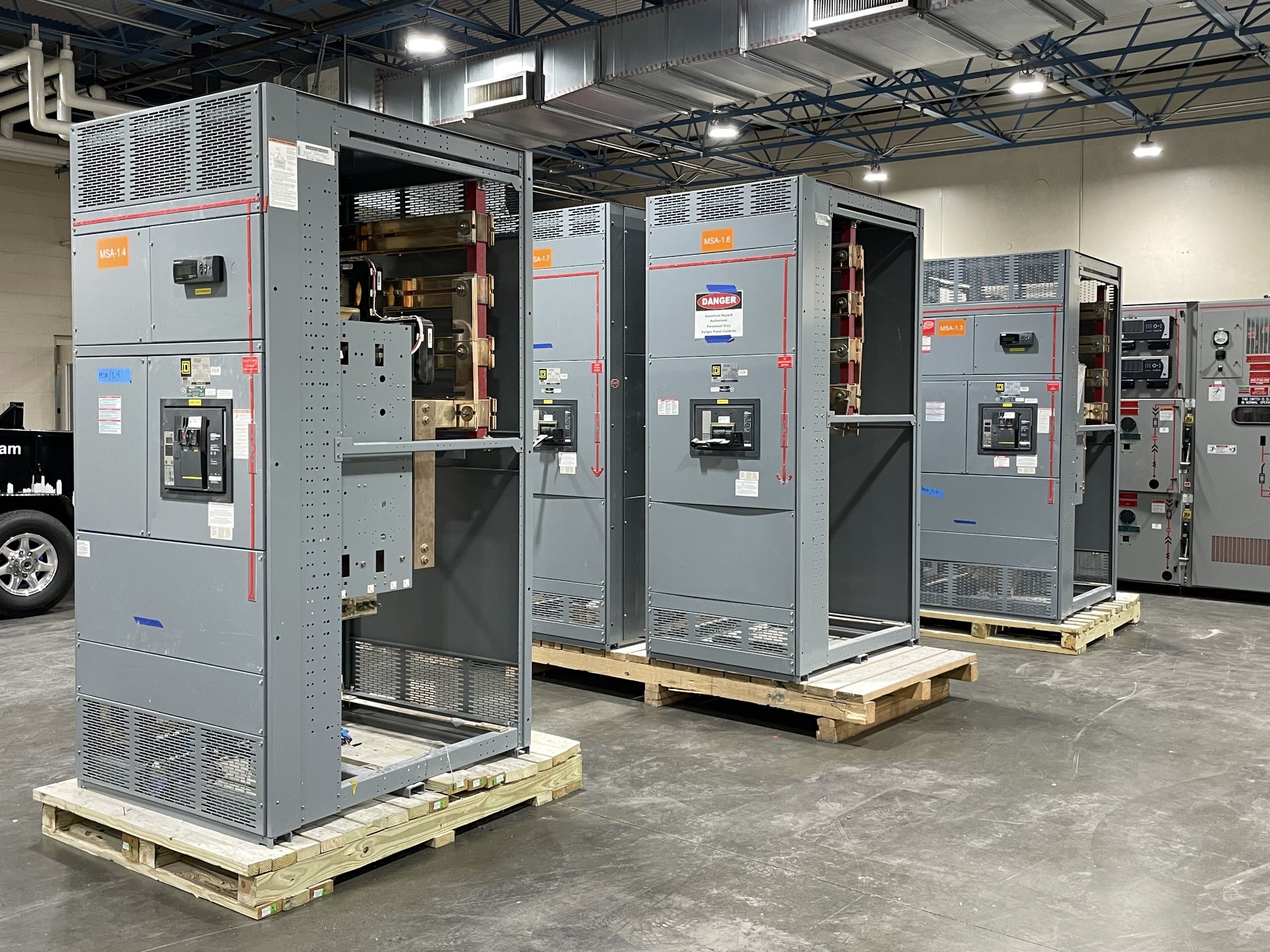
Group potential assets by their place in the power path: utility or service entrance, main distribution, transformers, switchgear, downstream panels, UPS and battery systems, and power distribution serving IT loads. This is a planning map, not a conclusion that every item in the chain is saleable. Record the equipment’s location and the upstream and downstream systems it serves when those details are known. Such context helps distinguish a standalone assembly from one embedded in a retained facility system.
The boundary may fall between components that share a room or enclosure line. For example, a data center may offer a dedicated distribution assembly while retaining service equipment that feeds offices, life-safety loads or other tenants. Draw the proposed cut in the inventory or a site plan, then identify any shared feeds or dependencies as unresolved. Do not infer that a particular component can be removed independently from a one-line diagram, rating label or photograph alone.
Explore related information: We Buy Used & Surplus Switchgear.
Keep IT assets outside the electrical offer
Servers, storage, network gear and racks are not the same scope as electrical distribution equipment. Unless specifically included in an agreed transaction, show them as retained or separately owned rather than blending them into a switchgear lot. The same applies to rack-mounted power strips and equipment supplied with IT hardware: their proximity to a distribution panel does not establish that they belong to the facility or are part of an electrical-equipment offer.
Cabling deserves its own boundary. Overhead busway, feeder conductors, branch circuits, rack whips, fiber and network cabling can cross ownership lines or serve multiple rooms. Note what is known about endpoints, ownership and intended retention, but do not represent a cable as included simply because it appears in a demolition drawing. If a line is shared, inaccessible or poorly documented, identify that uncertainty for the site team. The buying decision should rely on a truthful scope, not assumptions from color, route or appearance.
Separate building systems and shared services
Electrical rooms often contain equipment that supports the building rather than the data center load alone. Examples may include fire alarm and life-safety systems, emergency lighting, elevators, HVAC controls, pumps, security, common-area distribution and standby power serving multiple uses. These assets may be operationally essential even when a data center suite closes. List them separately from the proposed sale scope and confirm the responsible owner before treating them as surplus.
Generators, transfer equipment, UPS systems and batteries require particular care in the boundary record because they may serve both IT and building loads, or be governed by separate contracts. Identify the known loads, ownership and any retained connection points; label missing information as unknown rather than assigning the equipment to one party. A rating plate or equipment name does not establish the full system arrangement, condition or intended disposition. Do not touch or open equipment to resolve gaps; leave investigation to qualified personnel.
Explore related information: Nevada Distribution Equipment Buyer.
Describe assemblies and unknown details
For each proposed asset, capture what can be read or verified from existing records: manufacturer name if visible, model or catalog number, serial number, assembly rating, voltage class, approximate quantity, location and photographs of exterior labels. Keep assembly information distinct from device-level details. A switchgear lineup’s rating does not automatically describe every breaker or component within it, and a device marking does not prove the rating or configuration of the complete assembly.
Old drawings, photographs and asset lists may be incomplete, especially after upgrades or room changes. Record discrepancies and unknowns plainly; do not fill gaps by guessing a model, breaker complement, condition or connectivity. Testing is not required from sellers for a buying review, and no condition conclusion should be inferred from a document or a single rating. Never energize, open or handle equipment to gather information. Qualified site personnel should manage any necessary inspection or safety review.
Set the handoff boundary before closure
The inventory should name the party responsible for each boundary: the seller or owner, facility operator, tenant, property manager and any qualified contractors involved in site work. Clarify what must remain energized or in place for other occupants, what is already decommissioned, and what access or closure constraints apply. This is especially important when rooms are shared, equipment sits above a tenant space, or the facility must preserve service to retained loads. Scope clarity reduces the risk of treating a building obligation as surplus.
The business buys used, surplus and decommissioned electrical equipment, including switchgear from decommissioned data centers and shut-down power plants. It can make cash offers with payment upfront, buys across voltage classes, and covers freight. For accepted equipment, it handles crane, rigging, disconnects, loading and hauling coordination; sellers do not have to test, rig, lift, disconnect or move it. Acceptance and value are assessed item by item, not guaranteed. Keep the sale boundary and access coordination clear so the seller’s practical role is limited to defining what is offered and getting paid.