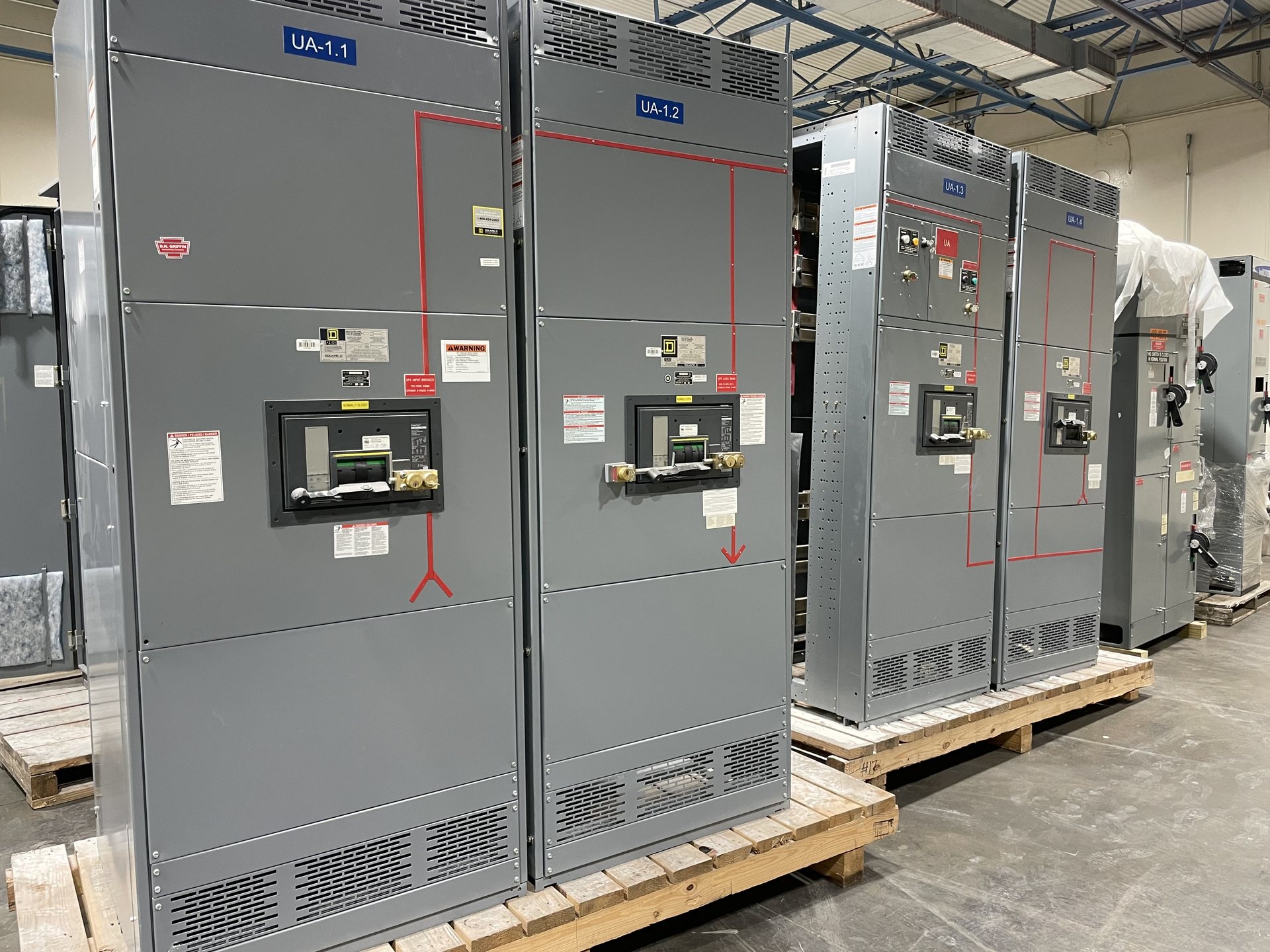
Draw the boundary by function
Start by distinguishing equipment that distributes power through the building from electrical components serving an individual machine. Switchgear, switchboards, panelboards, transformers and related distribution assemblies may be candidates for purchase; a motor starter, drive or control cabinet dedicated to a production line may belong with that machine. Physical proximity is not proof of ownership or inclusion. A cabinet beside a line could serve the building, the process, or both, so describe its known function and connections rather than assigning it by location alone.
Make a simple boundary schedule with separate categories for building distribution, machine-attached equipment, spare parts and excluded or retained assets. Record equipment identifiers and location, plus whether each item is included, excluded or still under review. If a label is unreadable, a drawing is missing, or the service relationship is uncertain, say so. Accurate unknowns are more useful than a confident guess, especially where one sale could otherwise appear to include an entire production area.
Separate equipment from materials
Raw materials and operating supplies are not automatically part of an electrical-equipment offer. Cable reels, unused breakers, fuses, lubricants, bus material and spare control parts may be stored beside a lineup without being installed in it—or owned by the same party. List loose inventory separately from installed assemblies, and indicate whether it is included in the proposed sale. Do not treat a nearby pallet or cabinet contents as included merely because it appears in a site photograph.
This distinction matters at closure because materials may be reserved for another facility, belong to a contractor, or be subject to a separate disposition. Where ownership or status is unknown, mark the item for confirmation rather than bundling it into the electrical scope. For surplus stock, useful details include the visible description, quantity if known, packaging state and storage location. Avoid promising condition from appearance alone; no seller testing is required for an offer, but truthful description of what has and has not been verified remains important.
Explore related information: We Buy Used & Surplus Switchgear.
Identify retained infrastructure
Some electrical assets must remain because they support retained property or an ongoing transition. Examples can include utility interfaces, shared service distribution, emergency systems, equipment serving occupied offices, or circuits needed by another tenant. A plant closure does not by itself establish that every decommissioned-looking assembly is available. Confirm which systems are staying, which are being removed by others, and whether a proposed asset has a shared role before including it in an offer request.
Use available one-line diagrams, panel schedules, equipment labels and site records as references, while noting that records may be outdated or incomplete. A drawing can help identify a feeder or assembly but cannot settle ownership or current use on its own. Do not ask unqualified staff to inspect energized equipment or open enclosures to resolve a question. Leave electrical work to qualified personnel and describe uncertainty plainly. A clear exclusion list is as valuable as an inclusion list when infrastructure must remain intact.
Specify exactly what is offered
Give each proposed asset a stable reference, such as a tag number or location paired with a description. For a switchgear lineup, identify the assembly as a whole where that is the intended boundary, and distinguish separately offered components only when they are genuinely separate assets. Include known manufacturer, model, serial or nameplate information where legible, along with voltage information if available. Do not infer that every device in an assembly has the same rating as the assembly, or that one rating establishes compatibility, condition or suitability.
State whether attached sections, removable units, spare devices, bus connections, control components or accessories are included—or explicitly unknown. Photos and old records can support identification but may omit modifications, accessories or internal details; they should not silently expand the sale scope. Use wording such as “included as identified,” “excluded,” or “subject to confirmation,” and resolve material ambiguities before acceptance. An offer is based on the described scope and is not a promise that every listed piece will be accepted or assigned a particular value.
Explore related information: Nevada Distribution Equipment Buyer.
Confirm authority and approval
The person compiling the inventory may not have authority to sell the assets. Identify the legal owner or authorized representative, and confirm who can approve the final asset schedule, exclusions and access arrangements. In a closure involving a landlord, operating company, lender, receiver or contractor, responsibilities may be divided. Do not assume that a facilities contact, plant manager or equipment custodian can commit every party. Record the decision-maker’s role and the approval path before treating a draft list as a sale boundary.
Keep the approval record tied to a versioned schedule: date it, identify revisions, and note which items were added, removed or reclassified. If ownership is disputed or a third party controls an asset, hold it out of scope until authorization is clear. This protects both sides from confusion when building systems and production assets share spaces, labels or records. A buyer can consider identified used, surplus and decommissioned electrical equipment, including switchgear from closed plants, but only the accepted scope is part of a transaction.
Coordinate scope with site logistics
A sale boundary also affects access and closure coordination. Identify where each accepted asset sits, whether it is inside a restricted area, and whether site access depends on the owner, landlord or another contractor. Note known constraints such as retained operations, demolition sequencing or a limited access window without presenting them as removal instructions. The buyer can handle crane, rigging, disconnects, loading, freight and hauling for accepted equipment; the seller is not expected to perform those tasks. Agree on scope and coordination before work is scheduled.
Nevada sellers may request cash offers with payment upfront, and no testing is required from the seller. Equipment of all voltage classes may be considered; voltage alone does not establish acceptance or value. The buyer covers freight, while the actual logistics plan depends on the accepted assets and site coordination. Keep equipment descriptions honest, including unknown condition or incomplete documentation. Do not touch or open equipment to gather details; leave any necessary electrical work to qualified personnel. The seller’s role is to establish authority and scope, then coordinate access—not to rig or move the assets.