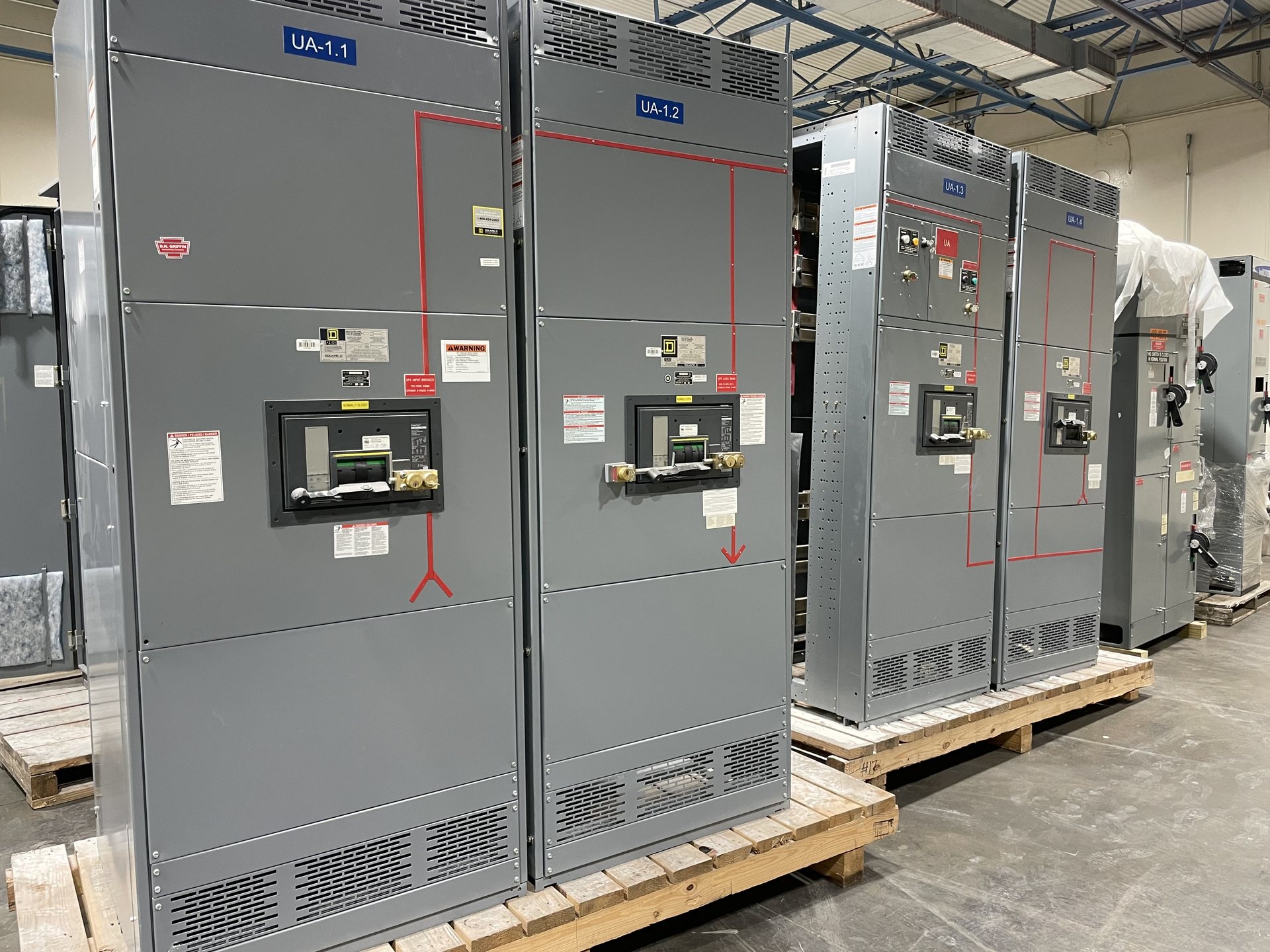
Start with the records you have
Gather available one-line diagrams, equipment schedules, panel schedules, floor plans, and decommissioning records before assigning assets to either path. Look for A/B designations, switchboard and panel names, feeder references, room or lineup identifiers, and revision dates. A drawing can establish what the design intended to connect; it does not, by itself, prove that the present installation matches the drawing or that an asset belongs to the seller.
Keep conflicting versions rather than silently choosing one. Note the document date and source, and label unresolved differences as unknown. A superseded drawing may still help explain an older lineup, while a current schedule may omit equipment added later. The goal is a traceable inventory, not a reconstructed electrical design: record what the documents call an item and what visible labels say, without concluding that a path is complete or operational.
Use labels to distinguish the paths
Record the exact wording and location of each accessible nameplate or external identifier, including asset tag, manufacturer, model, serial number, assembly name, and A or B designation when present. Capture lineup position and adjacent identifiers as context. A panel marked “B” is evidence of its label, but does not establish the full upstream path or prove that every connected component is part of the B inventory.
Compare identifiers against drawings and schedules, and preserve discrepancies rather than normalizing them. For example, a drawing may call a distribution board “A-2” while a site tag uses a different number. Treat that as a question for the facility’s records or qualified site personnel. If photographs or documents are incomplete, state exactly what is legible and what is not; do not infer a manufacturer or product series from appearance alone.
Explore related information: We Buy Used & Surplus Switchgear.
Do not assume mirrored equipment
A and B paths are often discussed as redundant, but that design intent does not mean the installed assets are identical. The paths may have different switchgear lineups, distribution panels, transformer arrangements, ages, manufacturers, configurations, or later modifications. List each assembly separately, even where the drawings show matching symbols or the equipment looks similar. Similarity is useful context, not proof of interchangeable equipment, equal condition, or equal sale value.
For every asset, distinguish documented assembly details from device-level details. A switchboard’s listed rating describes the assembly as identified in its records or nameplate; it should not be assigned automatically to individual breakers or other devices. Record separate ratings only when they are clearly documented for those devices. Avoid conclusions about compatibility or performance based on one rating, a matching label, or the fact that the other path appears equivalent.
Define the sale boundary
A path diagram can span equipment owned by different parties or included in separate contracts. Before presenting an inventory, identify the seller’s ownership basis and the intended sale boundary: entire lineups, selected distribution assemblies, spare equipment, or only items released from the decommissioning scope. Do not assume that equipment serving the same data hall shares ownership or that all assets marked A or B are included.
Create an inclusion schedule that assigns each listed item a clear status, such as included, excluded, pending ownership confirmation, or not located. If a feeder, tie, or shared assembly appears between paths, describe its documented relationship without assigning it to both sides by default. This prevents a buyer from interpreting a broad “A and B power” label as authority to purchase every item shown on a drawing.
Explore related information: Nevada Distribution Equipment Buyer.
Make uncertainty useful
A practical inventory can show known facts, sources, and open questions side by side. For each asset, note its identifier, stated A/B path, location or lineup position, document reference, visible label details, ownership status, and whether the information is confirmed or uncertain. Use “not visible,” “not documented,” or “designation unclear” where appropriate instead of filling gaps with assumptions. A clear unknown is more useful than a confident but unsupported description.
Photographs and old records can support identification, but they may omit a rear label, later modification, or equipment outside the frame. Describe what they actually show and disclose missing context. Sellers are not required to test equipment for a purchase discussion. Do not touch or open equipment to gather information; leave any site work to qualified personnel. No condition or operating conclusion should be drawn from a drawing, label, or photograph alone.
Present a reviewable package
Group the inventory by path, then list shared or unassigned assets separately. Use consistent identifiers across the schedule, drawings, and photographs, and flag duplicate tags or gaps. Include the drawing revision where known and identify records that conflict. This lets a buyer review A and B as distinct sets, ask targeted questions, and determine whether the proposed scope is clear without treating a diagram as proof that all depicted equipment remains on site.
A Nevada buyer may consider used, surplus, or decommissioned switchgear from data centers and shut-down power plants, but an offer is not a promise to accept every item or establish a particular value. The business buys equipment, offers cash with payment upfront, and requires no seller testing. It buys all voltage classes and covers freight; its team handles crane, rigging, disconnects, loading, freight, and hauling. The seller does nothing but get paid, subject to an agreed purchase.