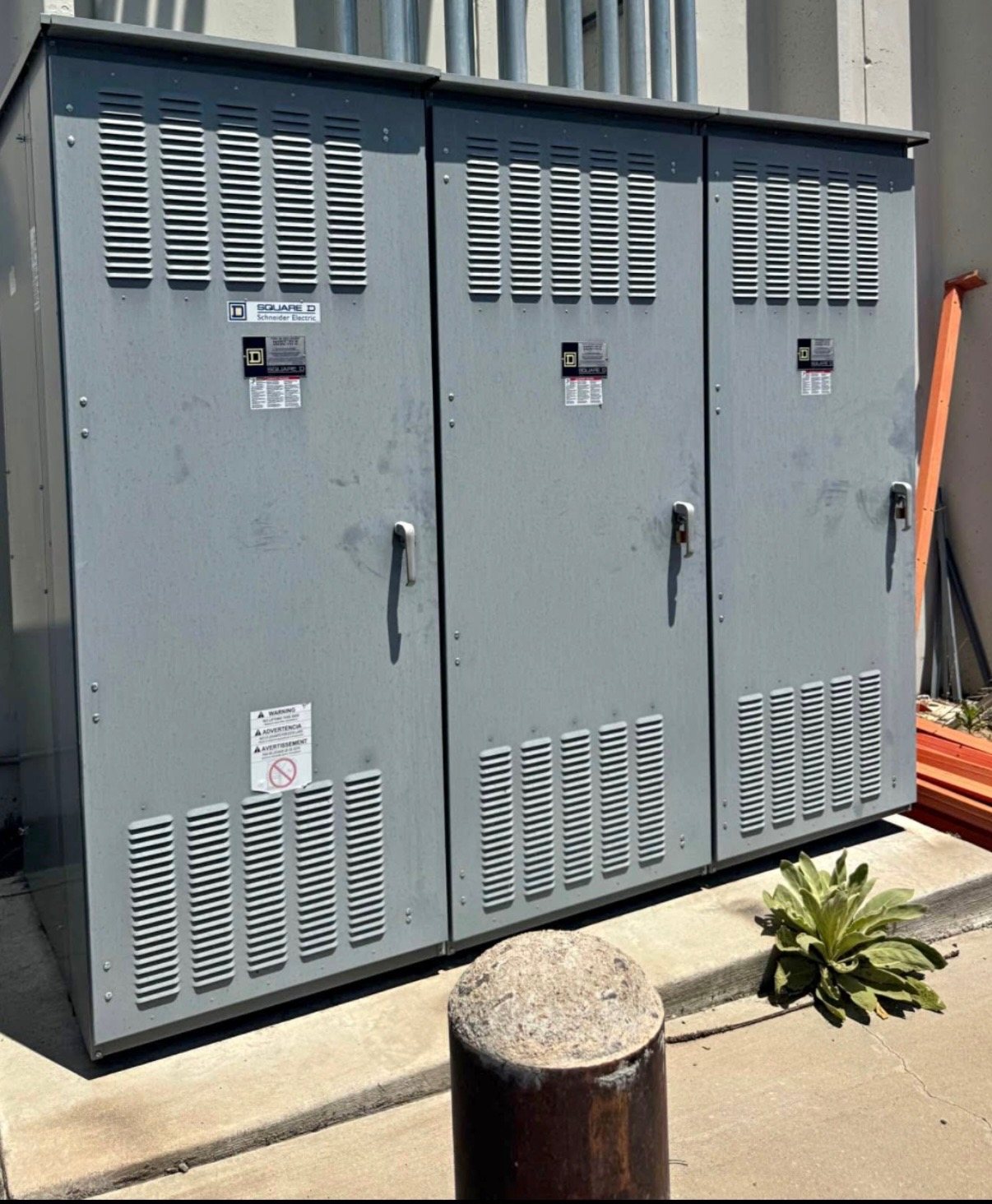
Pinpoint the equipment’s room
Identify the switchgear’s known location as specifically as you can: building or site, level, room name or number, and any commonly used location label. Note whether the equipment is in a dedicated electrical room, a data-center area, a plant space, or another part of the property, but do not guess if the label or use is uncertain. If several lineups or enclosures are present, describe which group is being discussed and how it is distinguished from nearby equipment. A room label alone may not identify the sale equipment, particularly where old drawings use a different naming convention.
Say what is verified and what is based on memory, a photograph, or an old document. Room plans may predate renovations, equipment may have been relocated, and photos can omit adjoining sections. Those are useful clues, not proof of present location or configuration. You do not need to enter a room or approach equipment to fill gaps. If details are unavailable, mark them unknown; the logistics team can assess what information is needed through the site’s authorized contact.
Describe entrance restrictions
Report known entry conditions that could affect whether a logistics visit is possible: which entrance visitors are permitted to use, whether access requires advance approval, and whether the site has stated limits on vehicle entry, arrival, or visitor movement. Include restrictions communicated by the owner or site representative, rather than inferring them from a gate, doorway, or past visit. Do not provide access codes in an open inquiry; arrange sensitive credentials directly with the authorized contact using an appropriate channel.
For switchgear, the route from a permitted entrance to the equipment room may matter as much as the room itself, but reporting that route is not a request for you to assess or direct removal. Note known doors, corridors, elevators, controlled areas, or other constraints only if the site has already identified them. Do not measure, move obstacles, or attempt to establish whether equipment can pass. The buyer’s logistics team handles removal planning and coordinates site work; uncertain access conditions should remain explicitly unresolved.
Explore related information: We Buy Used & Surplus Switchgear.
Name the people who can authorize entry
Provide a reliable contact name and role for the person who can confirm site access, plus the best contact method and any required process for arranging a visit. The equipment owner, current occupant, facilities representative, and person managing a shutdown may be different parties. Clarify who owns or controls the switchgear and who has authority to approve entry and removal; permission from a person familiar with the room does not necessarily establish authority to sell or release the equipment.
If the property is closed, being decommissioned, or no longer routinely staffed, identify the current party responsible for access rather than relying on a former employee’s information. For gear at a decommissioned data center or shut-down power plant, ownership and access arrangements can change as operations end or property control transfers. State any handoff or uncertainty plainly. The buyer can coordinate with the contact you identify, but cannot treat an unanswered message, old keyholder listing, or apparent vacancy as permission.
Give the permitted access window
Share the site-authorized days and time windows for a logistics visit, including any advance-notice requirement, sign-in procedure, escort requirement, or approval lead time you have been told applies. Distinguish a confirmed access window from a preferred time or an assumption based on normal business hours. If access depends on a shutdown, outage, tenant schedule, or security approval, describe that dependency without suggesting that the buyer or seller should alter electrical operations.
A narrow window can affect coordination among site personnel, the logistics team, and any other parties whose permission is needed. It is therefore useful to know when the site can admit visitors, when that information was confirmed, and whom to contact if the window changes. Do not promise availability on behalf of a site you do not control. If the authorized window is not yet known, say so; a possible purchase remains subject to review and workable, approved access.
Explore related information: Nevada Low-Voltage Switchgear Buyer.
Separate equipment identity from access facts
Room and access details help locate the equipment, but they do not establish exactly what is included in a proposed sale. Share available nameplate information, lineup identifiers, manufacturer labels, approximate section count, and any known distinction between the switchgear and adjacent equipment. Identify labels as observed or transcribed, and flag unreadable plates, missing records, and uncertain boundaries. Old one-line diagrams or inventory lists can help orient the discussion, but may not match the present installation.
Be especially clear about what belongs with the switchgear and what may belong to the site or another owner, such as neighboring assemblies or separate components. Do not infer that every device in a lineup is included, or that a drawing proves a particular section is present. Never touch or open equipment to obtain details; leave any inspection or electrical work to qualified personnel. No testing is required from the seller. The buyer may consider equipment across voltage classes, but acceptance and value are determined item by item, not from a rating alone.
Coordinate scope and removal responsibly
Before access is arranged, make clear what the site will authorize the buyer to evaluate and, if accepted, what equipment the owner may release. Note any parts excluded from the sale, shared spaces, active operations, or other parties whose approval is outstanding. This prevents a location description from being mistaken for permission to remove everything nearby. Do not make commitments for a landlord, operator, utility, or property owner unless you are authorized to do so.
If the equipment is accepted, the buyer handles the required disconnects, crane and rigging coordination, loading, freight, and hauling, with the site and its authorized personnel coordinating access and permissions. The seller is not asked to direct a lift, test the gear, or arrange its movement. The buyer covers freight and makes cash offers with payment upfront for accepted purchases. These terms do not guarantee that every item will be accepted or establish a value in advance. Share accurate access facts, identify unknowns, and leave hands-on work to qualified personnel.