Location Is One Detail
For equipment stored in North Las Vegas, the storage location helps frame a possible pickup and freight review. It does not establish what is in the lot, who owns it, or whether it is available for purchase. Start with a plain inventory that identifies the storage location, the equipment offered and the person authorized to discuss the property.
Keep the equipment description separate from the site description. A warehouse may hold material from more than one order, phase, or owner, and nearby items are not automatically part of the same sale. State which items are included and which are excluded, especially if the overstock is mixed with retained project supplies. Where ownership or authority is uncertain, resolve that before representing the items as available.
Reconcile Ordered and Delivered
Compare the original purchase description and quantity with delivery records, packing lists, invoices, and what can be identified in the warehouse. An order for several switchboard sections does not prove that all sections arrived, remain in storage, or are included in the proposed sale. Note discrepancies plainly: ordered, documented as delivered, presently accounted for, and offered are separate figures.
This reconciliation is particularly useful when project overstock accumulated through substitutions, partial shipments, or revised scope. A document may describe a planned configuration rather than the equipment ultimately supplied. If counts cannot be confirmed, say so instead of filling gaps by inference. The buyer can consider the information provided, but an offer is not a promise to accept every item or a statement that every listed quantity has a particular value.
Explore related information: We Buy Used & Surplus Switchgear.
Read Present Labels Carefully
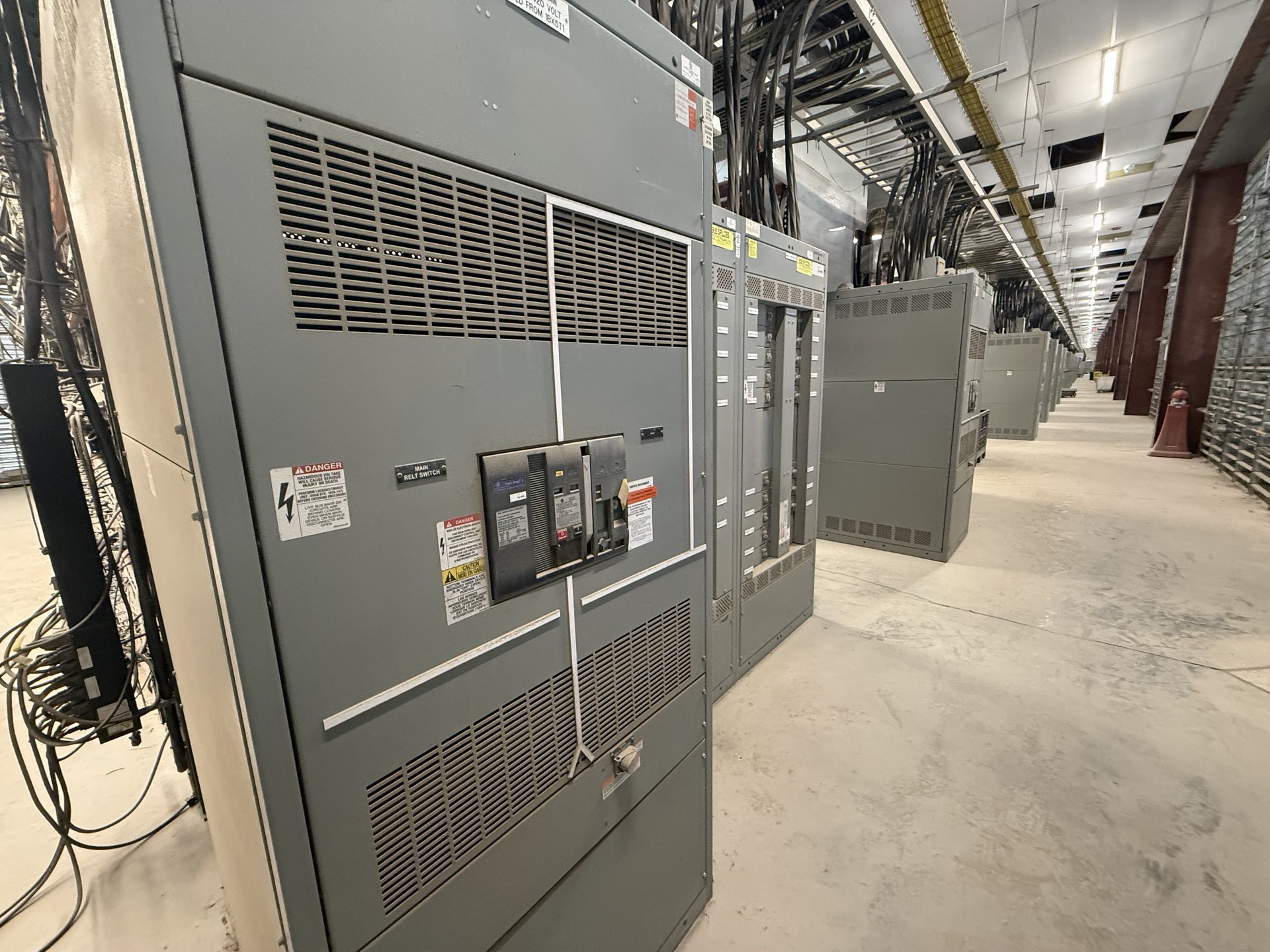
Original descriptions may use project names, purchase-order shorthand, or specifications that do not match the labels now visible on stored equipment. Record legible manufacturer, catalog or model references, nameplate wording, section identifiers, and any apparent serial information. Preserve the distinction between a readable label and a detail copied from paperwork; they are different sources and may not agree.
Photographs and old documentation can help explain the lot, but they may be incomplete, outdated, or associated with a different item. Identify unclear, obscured, missing, or conflicting information as unknown. Do not assume that a brand name on one document identifies every component nearby, or that a project description proves a particular assembly is present. Truthful limits make the inventory more useful than an unsupported exact match.
Separate Switchboards from Loose Stock
An uninstalled switchboard is not the same offering as a pallet of breakers, bus components, enclosures, fasteners, or other electrical material. Describe each complete assembly by the available identifying information and say whether it is uninstalled, without implying that it has been tested or verified. Separately count loose devices and hardware, and clarify whether they are included, offered as a distinct lot, or retained by the owner.
This distinction matters because a complete assembly, spare parts, and general project material are evaluated as different kinds of inventory. A delivery record for a switchboard does not establish that every loose item belongs with it; likewise, a photograph of a board does not show that related parts are included. If the intended sale covers only switchboards, say that explicitly and exclude adjacent stock from the offer discussion.
Explore related information: Nevada Switchboard Buyer.
Describe Condition Without Testing
For unused overstock, useful facts include whether equipment was installed, whether packaging appears present, and whether storage or handling is known. These observations do not establish internal condition, completeness, operation, or suitability. If the equipment’s history is uncertain, say “unknown” rather than describing it as new, complete, or ready for use based only on appearance or an old order description.
Sellers do not need to test equipment for a buying review. Do not touch or open equipment to gather details; leave any necessary work to qualified personnel. The buyer considers the information available and can make a cash offer with payment upfront if the items are accepted. That offer is not a guarantee that each piece will be bought, nor does it confirm an unverified condition or value.
Define the Offered Lot and Pickup Scope
Before discussing removal, make the proposed lot boundary clear: which switchboards and materials are for sale, which remain, and whether the inventory includes packaging or associated components. Also identify the person responsible for access and any known site restrictions or coordination requirements. These details help distinguish the seller’s inventory from the warehouse’s other contents without assuming anything about the facility or its operating arrangements.
The buyer covers freight and handles crane, rigging, disconnects, loading, and hauling for accepted equipment, so the seller does not need to perform those tasks. Sellers should not move, disconnect, lift, or handle equipment for the sale. Share access and coordination details honestly, including anything unknown; the buyer can assess logistics from that information. All voltage classes are considered, but a voltage label alone does not establish the assembly’s full configuration or determine acceptance.