Separate the hall’s three equipment groups
Start with the renovation scope, not with a pile of cabinets. Distribution equipment may become surplus when a hall is divided differently, service areas are relocated, or a former circuit arrangement is removed from the design. Compare the affected area with current plans and the revised electrical scope. A panel or switchgear lineup that appears unused may still supply retained rooms, shared services, or another event space; location alone does not establish that it is available for sale.
Keep event-specific temporary equipment in a separate category. Portable distribution, feeder assemblies, event power boxes, and other gear brought in for a particular show may belong to a contractor, rental provider, exhibitor, or event operator rather than the facility. Retained circuits form a third group: equipment and pathways still required for lighting, building services, life-safety systems, or future event configurations. Treat each group separately until an authorized owner confirms its status.
Identify the renovation phase
The phrase “surplus from the renovation” can describe equipment at very different stages. Some items may already be formally released; others may only be listed as candidates for removal while design work, approvals, or construction coordination continue. Ask which phase applies: planning, approved scope, removal preparation, or completed decommissioning. Record any conditions that could change the list, such as pending design decisions or a requirement to preserve capacity for a later phase.
This distinction matters because a buyer can consider only equipment the seller is authorized and able to transfer. A preliminary demolition mark-up is useful context, but it does not prove that a component is disconnected, released, or no longer needed. Keep proposed removals distinct from confirmed surplus, and note any dates or project milestones the facility has actually established. Avoid promising availability based on an anticipated change that has not been approved.
Explore related information: We Buy Used & Surplus Switchgear.
Confirm ownership before describing the lot
A convention facility may coordinate the renovation without owning every item affected by it. Confirm whether the equipment belongs to the facility owner, a tenant, an event contractor, a rental company, or another party. For shared or leased spaces, identify who can authorize a sale and who can confirm that the equipment is excluded from the construction contract. If several parties have an interest, resolve that authority before presenting the equipment as one saleable lot.
The useful contact may differ by question. Identify an owner or authorized representative for title and release, a project or facilities contact for scope and retained circuits, and a site-access contact for scheduling and entry requirements. These roles can be held by the same person, but do not assume they are. Names, responsibilities, and contact arrangements should be confirmed rather than inferred from a drawing, contractor label, or old equipment schedule.
Describe equipment without guessing
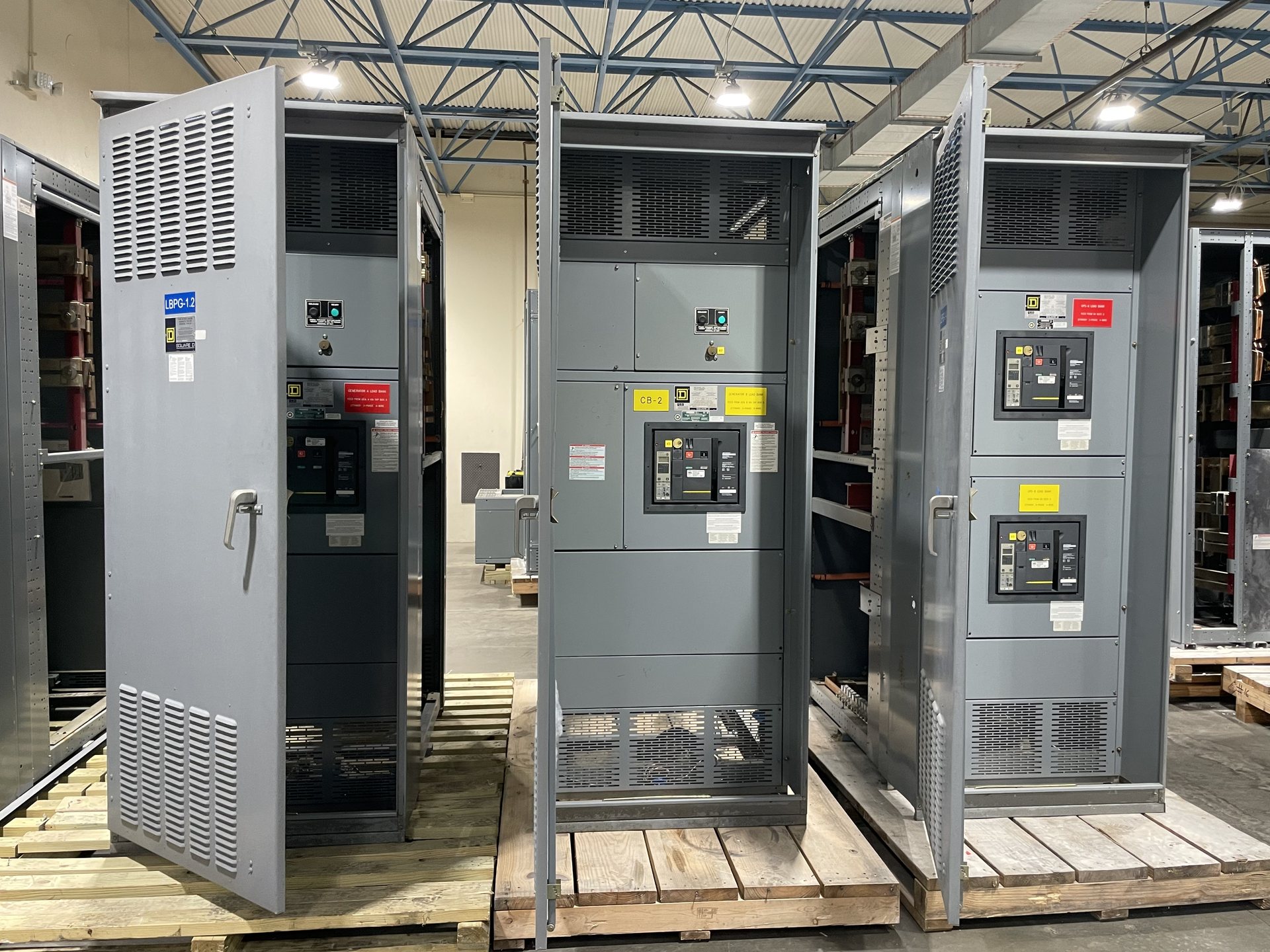
For each item, share what can be read or verified: manufacturer name, model or catalog number, visible nameplate information, assembly type, approximate quantity, and its location within the facility. Include photographs of exterior labels and the surrounding installation only when they can be taken without touching, opening, or approaching unsafe equipment. A lineup’s overall identification is not the same as the ratings of its individual devices; report each detail as shown and do not infer one from another.
Convention renovations often involve renamed halls, revised room numbers, and circuit identifiers that no longer match current plans. Preserve both the former and current location labels where known, and mark uncertain identifiers as uncertain. Old drawings, asset lists, and photographs can be incomplete or out of date. If a rating, ownership detail, or circuit destination cannot be verified from accessible records, say so plainly rather than filling in the gap. No seller testing is required for an offer.
Explore related information: Nevada Distribution Equipment Buyer.
Make retained circuits visible in the scope
A cabinet can look like a discrete removal while serving a network that crosses the renovation boundary. Hall divisions, service corridors, back-of-house areas, and shared electrical rooms may have circuits that continue to support adjacent spaces or event configurations. Ask the responsible facilities or project contact to identify retained equipment and any components reserved for future use. The buyer should receive a clear distinction between items offered for purchase and items that remain in place or under another party’s control.
Do not treat a circuit schedule as conclusive if it conflicts with current site information; equally, do not assume that an unclear label means a circuit is abandoned. Sellers should not open enclosures, test, energize, disconnect, or handle equipment to resolve uncertainty. Leave electrical work and site determinations to qualified personnel. For the buying review, a candid note such as “destination unconfirmed” is more useful than a confident but unsupported claim that a component is isolated or unused.
Coordinate access and removal scope
Agree on the proposed lot, access window, site rules, and responsible contacts before removal is scheduled. A convention venue may have ongoing bookings, restricted service areas, security procedures, construction zones, or delivery constraints; confirm the actual requirements with the site contact instead of assuming access is available. Clarify whether equipment is already released for removal or whether another project party must first complete its work. The location in Las Vegas identifies where the equipment is situated; it does not imply a local buyer office or a particular facility relationship.
For equipment accepted for purchase, the buyer handles crane needs, rigging, disconnects, loading, freight, and hauling, with the buyer covering freight. The seller is not expected to test, lift, disconnect, or move the equipment and does not need to arrange those services. The seller’s role is to establish ownership, accurately describe what is being offered, and coordinate authorized access. Any removal remains subject to the site’s requirements and agreement on the equipment included.
Request an offer with clear expectations
A practical submission brings together the confirmed surplus list, location references, available nameplate details, ownership confirmation, renovation phase, retained-circuit notes, and the right contacts for scope and access. State which details are documented and which remain unknown. If multiple areas or removal phases are involved, separate them so the buyer can review what is available now versus what may become available later. Clear boundaries help prevent temporary event gear or retained components from being mistaken for facility-owned surplus.
The company buys used, surplus, and decommissioned electrical equipment and can make cash offers with payment upfront for equipment it agrees to buy. An offer is not a promise to accept every item or a guarantee of any particular value; acceptance depends on the equipment and the information available. No testing is required from the seller. The best starting point is a truthful account of the renovation, ownership, condition as known, and access constraints—without claiming more than the records or authorized contacts can support.