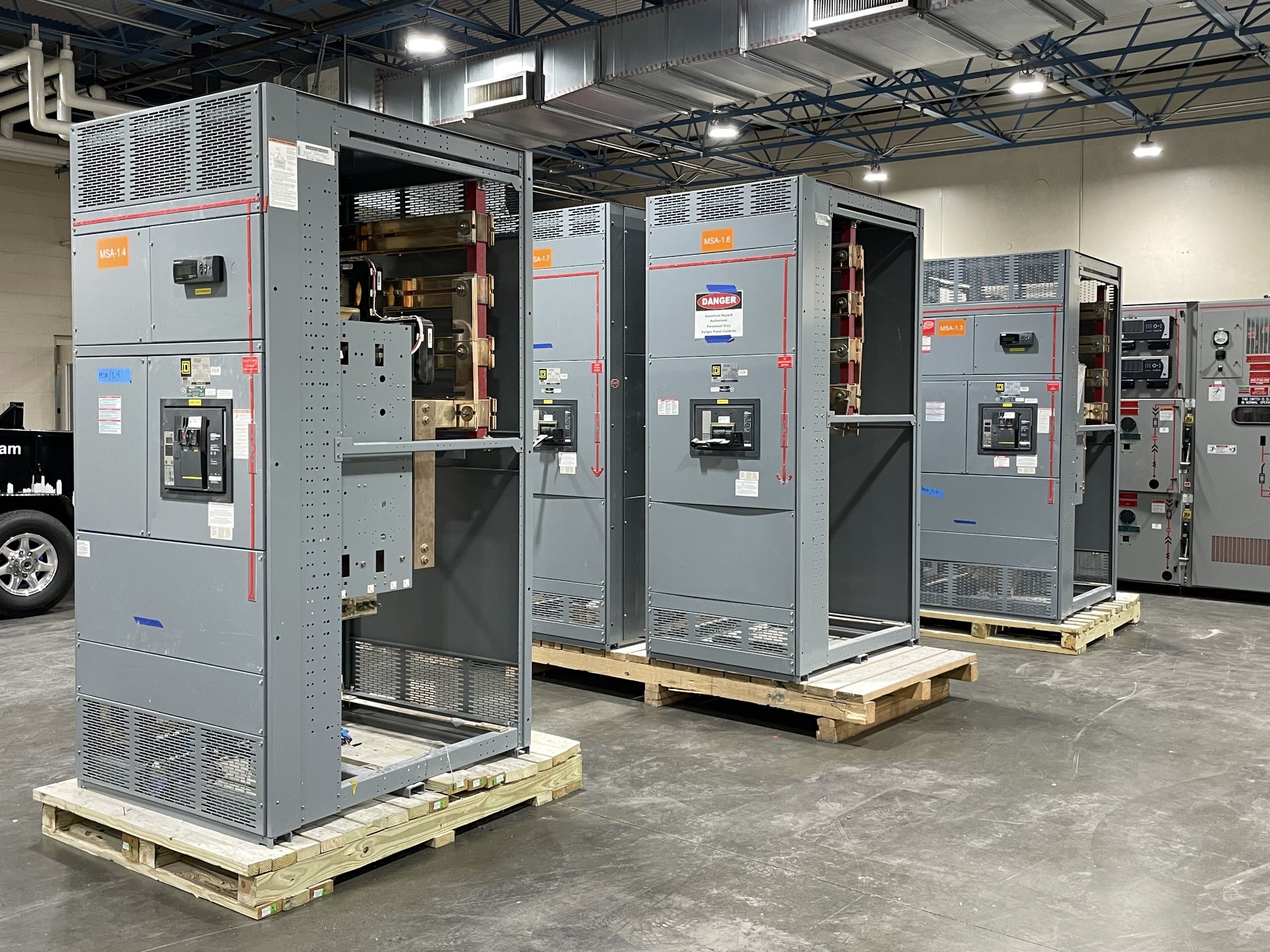
What belongs in the offer
The buyer needs to understand what the owner intends to offer before comparing individual details within the list. The voltage and current ratings on one device should not be copied to another device without supporting information. A useful description separates the assembly itself from unrelated equipment that happens to be stored nearby. Start with the equipment that is actually available, rather than a broad description of the former facility or project.
A project may generate several kinds of surplus, but each equipment group can be introduced as a separate entry. Unknown condition or missing labels can be recorded explicitly rather than filled in with assumptions. The scope of an offer is clearer when the owner distinguishes equipment included in the lot from equipment retained elsewhere. An inventory can begin with the broad equipment family and become more specific as existing records permit.
Nameplates and available records
Use the wording already present on the label where possible instead of converting an uncertain field into a guess. Manufacturer names, model numbers, and quantities can be recorded separately for each identifiable group. If there is an existing equipment schedule, identify the entry that corresponds to the item being offered. A rating is most useful when the list makes clear which specific unit or section the marking belongs to.
A readable label can narrow the description, while an unreadable field can simply remain marked as unknown. Dimensions and a known weight help describe the physical scope of the equipment being offered. Separate the overall assembly identifier from the part numbers of any components that are offered with it. Different devices in a single project can have different markings, so avoid applying one nameplate to the entire lot.
Explore related information: We Buy Used & Surplus Switchgear.
List sections and components
Separate line items help explain whether several pieces belong to one assembly or are simply part of the same lot. An overall asset list can note which photographs or existing documents correspond to each group of equipment. Unidentified items can be included as unknown components rather than assigned a function that has not been established. A count of enclosures does not necessarily describe the number of devices, so the two quantities can be recorded separately.
Describe the offer as it stands, including any known omissions, rather than making assumptions about its original configuration. A complete assembly and a loose component are different scopes of offer even when both appear in one project inventory. A buyer can better understand a mixed assortment when the list groups similar items and calls out the differences. The same project may include multiple assemblies; identifying their separate sections makes the description easier to follow.
Separate observations from unknowns
A useful inquiry can say what is unknown; complete documentation is not something a seller should have to invent. An electrical inventory may include switchgear, switchboards, panelboards, breakers, transformers, and other distinct asset types. If the owner knows that a piece is incomplete, describe the missing items without extrapolating beyond the available information. Note whether a condition description comes from an existing record or from an observation of the equipment exterior.
The absence of a known issue is different from a confirmed statement about the condition of an electrical device. Grouping equipment by family keeps a mixed lot understandable without assuming that all devices have the same rating. If an item has missing markings or incomplete records, include that fact instead of supplying a speculative specification. A photograph can show visible features, but it does not by itself establish internal condition or performance.
Explore related information: Utility Substations Switchgear Buyer.
Connect the asset to the project
For equipment associated with utility substations, the asset list should distinguish electrical equipment offered from other facility property. An equipment list can be organized by building, area, or storage group when those groupings are useful to the owner. A facility name alone does not identify the electrical equipment, so the asset description still needs its own details. If quantities or locations differ across items, note those distinctions on the list rather than relying on a single overview.
When several parties are involved, a clear inventory helps distinguish the equipment offered from other project property. The relevant project context can explain why the equipment is available without making claims about its technical condition. A project description should make clear which items are included rather than assuming all nearby assets are part of the offer. Consider whether the offer concerns one asset or several related groups, since the information needed to describe each may differ.
Payment, testing and freight
The seller does nothing but get paid: all rigging and logistics, including cranes, disconnects, loading, freight and hauling, are handled by us. Cash offers, payment upfront, no seller testing, and buyer-covered freight are the stated terms of this purchasing service. Where an inquiry contains several asset types, individual entries can help identify what is included in the proposed transaction.
Our buying scope includes electrical switchgear from decommissioned data centers and shut-down power plants, alongside other electrical assets. Our buying scope includes all voltage classes; a voltage on a label describes the item, not its unverified operating condition. The equipment description still matters because an inquiry should make clear which assets the owner is offering. All voltage classes are within the buying scope, while the details of a particular item still need to be described honestly.
Build an equipment inventory
Record the name and contact role of the person authorized to discuss the assets and any existing equipment list. If documentation is available, identify the specific item it describes and note any uncertainty about that match. Dimensions and weight, if already known, can be recorded alongside the equipment rather than guessed from a picture. Existing overall photographs and available nameplate images can be matched to the corresponding inventory entries.
Include the equipment location and describe whether the lot consists of one unit or multiple separate assemblies. A short list can include the equipment family, quantity, manufacturer and model when those details are known. A mixed lot can be organized by asset type, with unknown models or ratings marked as unknown. An offer inquiry is more informative when it distinguishes included accessories from equipment that is not included.